【数据结构】B-Tree(B 树)
一、基础概念:什么是 B 树?
1. 定义
B 树全称多路平衡查找树,是一种自平衡的多叉搜索树,专门为磁盘 IO 场景设计(数据库、文件系统底层索引)。 二叉搜索树一次只能二分,磁盘 IO 次数高;B 树一个节点存多条索引,大幅减少磁盘读写次数。
2. 阶数 m 的核心定义(最关键)
一棵 m 阶 B 树,满足硬性规则:
- 每个节点最多 m 个子节点,最多
m-1个关键字(key); - 除根节点外,所有非叶子节点最少 ⌈m/2⌉ 个子节点,最少
⌈m/2⌉ -1个关键字; - 根节点特殊:最少可以只有 2 个子节点(树高度 > 1 时),若整棵树只有根,允许 0 个子节点;
- 所有叶子节点全部在同一层(绝对平衡,不会出现左右高度差);
- 关键字有序:节点内关键字从小到大排列; 若节点关键字为
k₁ < k₂ < ... < kₙ,则:- 第 0 个子树:全部值 < k₁
- 第 i 个子树:
kᵢ < 全部值 < kᵢ₊₁ - 最后一个子树:全部值 > kₙ
3. 通俗举例:4 阶 B 树(最常用,m=4,2-3-4 树)
m=4,最多 4 子树、3 关键字;最少⌈4/2⌉=2 子树、1 关键字。
- 节点可存 1/2/3 个 key,对应 2/3/4 个子节点;
- 超过 3 个 key 触发节点分裂;
- 少于 1 个 key 触发节点合并 / 借值。
二、B 树节点结构拆解
节点内部存储结构(磁盘页标准格式)
[子树指针0][key₀][子树指针1][key₁][子树指针2]...[keyₙ₋₁][子树指针n]- Key:索引关键字(如主键 ID、数字),附带数据地址(磁盘记录偏移);
- 子树指针:指向下层磁盘页(子节点);
- 叶子节点:子树指针全部为空,key 直接绑定完整数据;
- 非叶子节点:仅存索引 key,不存完整数据,只用来路由查找。
和二叉搜索树对比
| 特性 | 二叉搜索树 BST | m 阶 B 树 |
|---|---|---|
| 分支数 | 最多 2 叉 | 最多 m 叉 |
| 磁盘 IO | 树高很高,IO 频繁 | 树高极小,IO 极少 |
| 平衡特性 | 普通 BST 会退化链表,AVL 平衡但维护复杂 | 天然全局平衡,所有叶子同层 |
| 适用场景 | 内存小规模数据 | 磁盘数据库、文件索引 |
三、B 树核心四大操作:查找 / 插入 / 删除 / 分裂 / 合并
(1)查找操作(递归逻辑)
流程
- 从根节点进入,遍历当前节点有序 key 数组;
- 找到等于目标 key:直接返回该节点数据;
- 找到第一个大于目标的 key,走它左侧子树;
- 所有 key 都小于目标,走最后一个子树;
- 走到叶子节点仍未匹配:查找失败。
示例(4 阶 B 树)
节点 key:[10,30,50],查找 25
- 10 < 25 < 30 → 进入 10 和 30 中间的子树递归查找;
- 直到叶子节点判断有无 25。
复杂度
树高 h ≤ log⌈m/2⌉(N+1)/2,N 为总数据量;
每一层仅 1 次磁盘 IO,数据库百万级数据仅 3~4 次 IO 即可完成查找。
(2)插入操作
整体规则
- 插入永远先找到对应叶子节点,不会插入非叶子;
- 叶子插入 key 后,若 key 数量 ≤ m-1:直接结束;
- 若 key 数量 == m(溢出):执行分裂操作。
分裂完整步骤(m 阶通用)
- 把当前满节点全部 key + 新 key 合并为有序数组;
- 取中间位置
mid = floor(m/2)的 key,提升到父节点; - mid 左侧所有 key、子树留在原节点;
- mid 右侧所有 key、子树新建右侧兄弟节点;
- 父节点插入上升的 mid 关键字,若父节点也溢出,递归向上分裂;
- 若一直分裂到根节点:新建根节点,树高度 + 1。
实操演示:4 阶 B 树(m=4,最多 3key)
采用工业 0 下标(Base-0),现有叶子节点 [12,24,36](已满 3 个),插入 28:
- 合并数组
[12,24,28,36]; - mid=2,中间值 28 提升到父节点;
- 左节点:
[12,24],右节点:[36]; - 父节点新增 key=24,完成分裂; 若父节点插入后也满,重复分裂逻辑。
(3)删除操作(核心:借值 / 合并)
删除分两种场景:删除叶子 key、删除非叶子 key。
场景 1:删除叶子节点关键字
- 删除后 key 数量 ≥ 最小下限(⌈m/2⌉-1):直接删除,结束;
- 删除后 key 数量 < 最小下限(欠载):两种补救方案
- 方案 A:向左右兄弟借关键字(优先执行) 兄弟节点 key 数量 > 最小值 → 兄弟拿一个 key 上移到父节点,父节点 key 下沉到当前节点,平衡数量;
- 方案 B:兄弟无多余 key,执行节点合并 当前节点 + 父节点分隔 key + 兄弟节点全部合并为一个节点; 父节点删除分隔 key,若父节点因此欠载,递归向上处理。
场景 2:删除非叶子节点关键字
非叶子 key 是分隔索引,不能直接删,替换规则:
- 取左子树最大值(左分支最右下叶子 key),替换待删除 key;
- 再去叶子节点删除这个最大值,转化为叶子删除逻辑; 等价方案:取右子树最小值替换。
举例(4 阶 B 树,最少 1 个 key)
叶子节点 [15],删除 15 后无 key,欠载:
- 看右兄弟
[25,35](有多余 key):借 35 的父分隔 key 下沉,兄弟给一个 key 过来; - 若兄弟只有 1 个 key,直接合并当前节点、父分隔 key、兄弟节点。
四、B-树(B树)的基本操作C++代码实现
本代码实现m 阶标准 B 树,完全采用工业 0 下标(Base-0)开发逻辑,包含完整增删查、四种遍历、最值、区间查询、节点分裂 / 借键 / 合并欠载修复全套逻辑。
(一)基础结构体与构造类
1. struct BNode 节点结构体
struct BNode {
    vector<int> keys;          // 当前节点存储的关键字数组,有序升序
    vector<BNode*> children;   // 子节点指针数组,长度恒等于 keys.size()+1
    bool leaf;                 // true=叶子节点(无下层子树),false=非叶子索引节点
    BNode(bool isLeaf = true) : leaf(isLeaf) {}
};- 存储规则:
keys[0] < keys[1] < ... < keys[n-1] - 子树对应关系:
children[0] 全部值 < keys[0]
children[i] 区间 keys[i-1] < val < keys[i]
children.back() 全部值 > keys.back()
2. class BTree 树类成员变量
int m;         // B树阶数 m
int max_keys;  // 单个节点最多关键字 m-1
int min_keys;  // 非根节点最少关键字 ⌈m/2⌉ -1 = (m-1)/2
BNode* root;   // 根节点指针
构造函数 BTree(int order):
BTree(int order) {
    m = order;
    max_keys = m - 1;
    min_keys = (m - 1) / 2;
    root = new BNode(true);
}- 初始化阶数
m = order - 计算节点容量上下限:
max_keys = m-1,min_keys = (m-1)/2 - 创建初始空根节点,默认是叶子节点(空树)
(二)查询相关函数
1. bool search(int key) 等值查找
bool search(int key) {
    BNode* cur = root;
    while (true) {
        int i = lower_bound(cur->keys.begin(), cur->keys.end(), key) - cur->keys.begin();
        if ((size_t)i < cur->keys.size() && cur->keys[i] == key) return true;
        if (cur->leaf) return false;
        cur = cur->children[i];
    }
}功能:从根向下遍历,判断关键字是否存在 执行流程:
cur = root从根节点开始循环lower_bound在当前节点有序 keys 中找到第一个≥key 的下标i- 若下标不越界且
cur->keys[i]==key,直接返回true(找到) - 如果当前是叶子节点,循环结束返回
false(不存在) - 否则进入子树
cur = cur->children[i],重复循环
示例:3 阶 B 树节点[22,47],查找 30
lower_bound找到下标 1(47),进入children[1]子树继续查找。
2. int get_pred(BNode* node, int idx) 获取前驱最大值
int get_pred(BNode* node, int idx) {
    BNode* cur = node->children[idx];
    while (!cur->leaf) cur = cur->children.back();
    return cur->keys.back();
}功能:删除非叶子节点关键字时,取左子树最大值替换待删 key 执行流程:
- 进入
node->children[idx]左子树 - 循环一直取最右侧子节点,直到抵达叶子
- 返回叶子节点最后一个 key(该子树最大值)
3. get_min() / get_max() 全局最值
int get_min() {
    BNode* cur = root;
    while (!cur->leaf) cur = cur->children[0];
    return cur->keys[0];
}
int get_max() {
    BNode* cur = root;
    while (!cur->leaf) cur = cur->children.back();
    return cur->keys.back();
}get_min():从根一直走最左子节点,直到叶子,返回叶子第一个 key(全局最小)get_max():从根一直走最右子节点,直到叶子,返回叶子最后一个 key(全局最大)
4. range_query(int l, int r) 区间查询
void range_collect(BNode* n, int low, int high, vector<int>& res) {
    if (n->leaf) {
        for (int k : n->keys) if (k >= low && k <= high) res.push_back(k);
        return;
    }
    for (int i = 0; (size_t)i < n->keys.size(); i++) {
        range_collect(n->children[i], low, high, res);
        if (n->keys[i] >= low && n->keys[i] <= high) res.push_back(n->keys[i]);
    }
    range_collect(n->children.back(), low, high, res);
}
vector<int> range_query(int l, int r) {
    vector<int> res;
    range_collect(root, l, r, res);
    return res;
}递归函数range_collect实现:
- 若当前是叶子节点:遍历所有 key,把
[l,r]范围内的值存入结果数组 - 若非叶子:
- 依次递归每一个子树
- 若当前分界 key 落在区间内,存入结果
- 最后递归最右侧子树 返回有序区间内全部关键字。
(三)插入模块:split_child + insert
1. void split_child(BNode* parent, int idx) 节点分裂核心函数
void split_child(BNode* parent, int idx) {
    BNode* node = parent->children[idx];
    BNode* right = new BNode(node->leaf);
    int mid = (int)node->keys.size() / 2;
    int mid_key = node->keys[mid];

    right->keys.assign(node->keys.begin() + mid + 1, node->keys.end());
    node->keys.resize((size_t)mid);

    if (!node->leaf) {
        right->children.assign(node->children.begin() + mid + 1, node->children.end());
        node->children.resize((size_t)(mid + 1));
    }

    parent->keys.insert(parent->keys.begin() + idx, mid_key);
    parent->children.insert(parent->children.begin() + idx + 1, right);
}触发条件:子节点关键字数量达到max_keys(溢出),二分拆分节点 执行步骤:
node = parent->children[idx]取出满的溢出节点- 新建空右兄弟节点
right,叶子属性和原节点一致 - 取中间下标
mid = node->keys.size()/2,中间值mid_key要提升到父节点 - 拆分关键字:
- 右节点拷贝
mid+1到末尾所有 key - 原节点只保留前
mid个 key
- 右节点拷贝
- 拆分子树指针(非叶子节点才执行):
- 右节点拷贝
mid+1之后所有子指针 - 原节点只保留前
mid+1个子指针
- 右节点拷贝
- 更新父节点:
- 父节点 keys 插入
mid_key作为新分界 - 父节点 children 插入新右兄弟节点
- 父节点 keys 插入
示例:3 阶节点[22,47,60]溢出,mid=1,mid_key=47 原节点保留[22],新右节点[60],47 提升到父节点。
2. void insert(int key) 完整插入流程
void insert(int key) {
    BNode* cur = root;
    vector<pair<BNode*, int>> stack;
    while (!cur->leaf) {
        int i = lower_bound(cur->keys.begin(), cur->keys.end(), key) - cur->keys.begin();
        if ((size_t)i < cur->keys.size() && cur->keys[i] == key) {
            cout << "键已存在\n";
            return;
        }
        stack.emplace_back(cur, i);
        cur = cur->children[i];
    }
    int pos = lower_bound(cur->keys.begin(), cur->keys.end(), key) - cur->keys.begin();
    if ((size_t)pos < cur->keys.size() && cur->keys[pos] == key) {
        cout << "键已存在\n";
        return;
    }
    cur->keys.insert(cur->keys.begin() + pos, key);

    while ((int)cur->keys.size() > max_keys) {
        if (stack.empty()) {
            BNode* new_root = new BNode(false);
            new_root->children.push_back(cur);
            split_child(new_root, 0);
            root = new_root;
            break;
        }
        pair<BNode*, int> item = stack.back();
        stack.pop_back();
        BNode* p = item.first;
        int idx = item.second;
        split_child(p, idx);
        cur = p;
    }
}核心规则:插入永远落到叶子节点,溢出后向上递归分裂 执行步骤:
- 初始化栈
stack,存储遍历路径(父节点 + 对应子树下标),用于向上分裂回溯 - 向下遍历找到目标叶子节点:
- 非叶子节点用
lower_bound找到对应子树下标 - 记录当前父节点与下标入栈,进入子树循环
- 非叶子节点用
- 在叶子节点有序插入 key,重复值直接提示并退出
- 向上循环处理溢出:
- 如果当前节点 key 数量 > max_keys(溢出)
- 栈为空 = 分裂到根节点:新建空根,把原根作为第一个子节点,调用
split_child分裂,更新全局root - 栈不为空:取出父节点与子树下标,调用
split_child分裂,切换当前节点为父节点继续循环判断溢出
- 无溢出则插入完成。
(四)删除模块全套函数(欠载修复、借键、合并)
1. remove_from_leaf(BNode* node, int key) 叶子节点删除 key
void remove_from_leaf(BNode* node, int key) {
    auto it = lower_bound(node->keys.begin(), node->keys.end(), key);
    if (it != node->keys.end() && *it == key) node->keys.erase(it);
}lower_bound定位 key,匹配成功直接 erase 删除,仅用于叶子节点。
2. borrow_left(BNode* parent, int idx) 向左兄弟借关键字
void borrow_left(BNode* parent, int idx) {
    BNode* cur = parent->children[idx];
    BNode* sib = parent->children[idx - 1];
    int sep = parent->keys[idx - 1];

    cur->keys.insert(cur->keys.begin(), sep);
    parent->keys[idx - 1] = sib->keys.back();
    sib->keys.pop_back();
    if (!cur->leaf) {
        cur->children.insert(cur->children.begin(), sib->children.back());
        sib->children.pop_back();
    }
}当前节点下标idx,向左邻兄弟idx-1借 key:
- 兄弟最后一个分界 key 下沉到当前节点头部
- 父节点原分界值替换为兄弟最后一个 key
- 兄弟删除末尾 key
- 非叶子节点同步迁移兄弟最右侧子树到当前节点头部
3. borrow_right(BNode* parent, int idx) 向右兄弟借关键字
void borrow_right(BNode* parent, int idx) {
    BNode* cur = parent->children[idx];
    BNode* sib = parent->children[idx + 1];
    int sep = parent->keys[idx];

    cur->keys.push_back(sep);
    parent->keys[idx] = sib->keys[0];
    sib->keys.erase(sib->keys.begin());
    if (!cur->leaf) {
        cur->children.push_back(sib->children[0]);
        sib->children.erase(sib->children.begin());
    }
}当前节点下标idx,向右邻兄弟idx+1借 key:
- 兄弟第一个分界 key 下沉到当前节点尾部
- 父节点原分界值替换为兄弟第一个 key
- 兄弟删除头部 key
- 非叶子节点同步迁移兄弟最左侧子树到当前节点尾部
4. merge(BNode* parent, int idx) 节点合并
void merge(BNode* parent, int idx) {
    BNode* left = parent->children[idx];
    BNode* right = parent->children[idx + 1];
    int sep = parent->keys[idx];

    left->keys.push_back(sep);
    left->keys.insert(left->keys.end(), right->keys.begin(), right->keys.end());
    if (!left->leaf) {
        left->children.insert(left->children.end(), right->children.begin(), right->children.end());
    }
    delete right;
    parent->keys.erase(parent->keys.begin() + idx);
    parent->children.erase(parent->children.begin() + idx + 1);
}
左右两个子节点容量都不足,无法借键,执行合并:
- 左节点 =
parent->children[idx],右节点 =parent->children[idx+1],分隔键sep = parent->keys[idx] - 左节点尾部追加分隔键 sep,再追加右节点全部 key
- 非叶子节点同步合并右节点所有子指针到左节点
- 删除右节点内存
- 父节点删除分隔键,删除右子节点指针
5. fix_underflow(BNode* node, vector<pair<BNode*, int>>& stack) 欠载修复主逻辑
void fix_underflow(BNode* node, vector<pair<BNode*, int>>& stack) {
    while (node != root && (int)node->keys.size() < min_keys) {
        pair<BNode*, int> item = stack.back();
        stack.pop_back();
        BNode* parent = item.first;
        int idx = item.second;

        BNode* left_sib = (idx > 0) ? parent->children[idx - 1] : nullptr;
        BNode* right_sib = ((size_t)(idx + 1) < parent->children.size()) ? parent->children[idx + 1] : nullptr;

        bool left_ok = (left_sib != nullptr) && ((int)left_sib->keys.size() > min_keys);
        bool right_ok = (right_sib != nullptr) && ((int)right_sib->keys.size() > min_keys);

        if (left_ok) {
            borrow_left(parent, idx);
            break;
        } else if (right_ok) {
            borrow_right(parent, idx);
            break;
        } else if (left_sib) {
            merge(parent, idx - 1);
        } else {
            merge(parent, idx);
        }
        node = parent;
    }
    if (root->keys.empty() && !root->children.empty()) {
        BNode* new_root = root->children[0];
        delete root;
        root = new_root;
    }
}
删除后节点 key 数量 < min_keys 时调用,自下而上修复: 循环条件:当前节点不是根,且关键字不足下限
- 取出栈内父节点与当前子树下标
- 判断左右兄弟是否有富余 key(key 数量 > min_keys)
- 左兄弟富余:
borrow_left借键,修复完成退出循环 - 右兄弟富余:
borrow_right借键,修复完成退出循环 - 两边都无富余:执行
merge合并节点
- 左兄弟富余:
- 将父节点设为当前节点,继续循环判断上层是否欠载 循环结束后特殊处理根节点: 若根无关键字、但存在子节点,将第一个子节点设为新根,释放旧根内存。
6. void del(int key) 删除主函数
void del(int key) {
    vector<pair<BNode*, int>> stack;
    BNode* cur = root;
    int pos;
    while (true) {
        pos = lower_bound(cur->keys.begin(), cur->keys.end(), key) - cur->keys.begin();
        if ((size_t)pos < cur->keys.size() && cur->keys[pos] == key) break;
        if (cur->leaf) { cout << "不存在\n"; return; }
        stack.emplace_back(cur, pos);
        cur = cur->children[pos];
    }
    if (cur->leaf) {
        remove_from_leaf(cur, key);
    } else {
        int pred = get_pred(cur, pos);
        cur->keys[pos] = pred;
        stack.emplace_back(cur, pos);
        cur = cur->children[pos];
        remove_from_leaf(cur, pred);
    }
    fix_underflow(cur, stack);
}
执行完整流程:
- 栈记录向下遍历路径,循环查找待删除 key 所在节点
- 分两种删除场景:
- 场景 1:key 在叶子节点:直接
remove_from_leaf删除 - 场景 2:key 在非叶子节点:取左子树最大值 pred 替换当前 key,再去叶子删除 pred
- 场景 1:key 在叶子节点:直接
- 调用
fix_underflow自下而上修复节点欠载、借键、合并。
(五)四大遍历函数
1. 中序遍历 inorder(BNode* n, vector<int>& res)
void inorder(BNode* n, vector<int>& res) {
    if (!n) return;
    // 非叶子节点才递归子节点
    if (!n->leaf)
    {
        for (int i = 0; (size_t)i < n->keys.size(); i++)
        {
            inorder(n->children[i], res);
            res.push_back(n->keys[i]);
        }
        // 最后一个子节点
        inorder(n->children.back(), res);
    }
    else
    {
        // 叶子节点直接输出所有key,不访问children
        for (int k : n->keys)
            res.push_back(k);
    }
}
vector<int> traversal_in() {
    vector<int> r;
    inorder(root, r);
    return r;
}
B 树中序遍历结果严格升序(核心特性) 递归规则:
- 非叶子节点: 依次递归子树 i → 存入 keys [i],最后递归最右子树
- 叶子节点:直接把所有 key 存入结果,无子树 输出:全局有序序列。
2. 前序遍历 preorder(BNode* n, vector<int>& res)
void preorder(BNode* n, vector<int>& res) {
    if (!n) return;
    res.insert(res.end(), n->keys.begin(), n->keys.end());
    for (auto c : n->children) preorder(c, res);
}
vector<int> traversal_pre() {
    vector<int> r; preorder(root, r); return r;
}
先访问当前节点全部 key,再依次递归所有子节点。
3. 后序遍历 postorder(BNode* n, vector<int>& res)
void postorder(BNode* n, vector<int>& res) {
    if (!n) return;
    for (auto c : n->children) postorder(c, res);
    res.insert(res.end(), n->keys.begin(), n->keys.end());
}
vector<int> traversal_post() {
    vector<int> r; postorder(root, r); return r;
}
先递归全部子节点,再存入当前节点所有 key。
4. 层序遍历 traversal_level()
vector<int> traversal_level() {
    vector<int> r;
    queue<BNode*> q; q.push(root);
    while (!q.empty()) {
        auto u = q.front(); q.pop();
        r.insert(r.end(), u->keys.begin(), u->keys.end());
        for (auto c : u->children) q.push(c);
    }
    return r;
}使用队列queue<BNode*>实现广度优先:
- 根节点入队
- 循环取出队首节点,存入所有 key
- 把该节点所有子节点依次入队 输出:从上到下、每层从左到右的节点关键字。
(六)C++完整代码参考地址与运行结果完整展示
1.参考地址
GitHub:B-Tree-Visualizer/btree.cpp at main · hongyuxu0/B-Tree-Visualizer · GitHub
2.运行结果完整展示
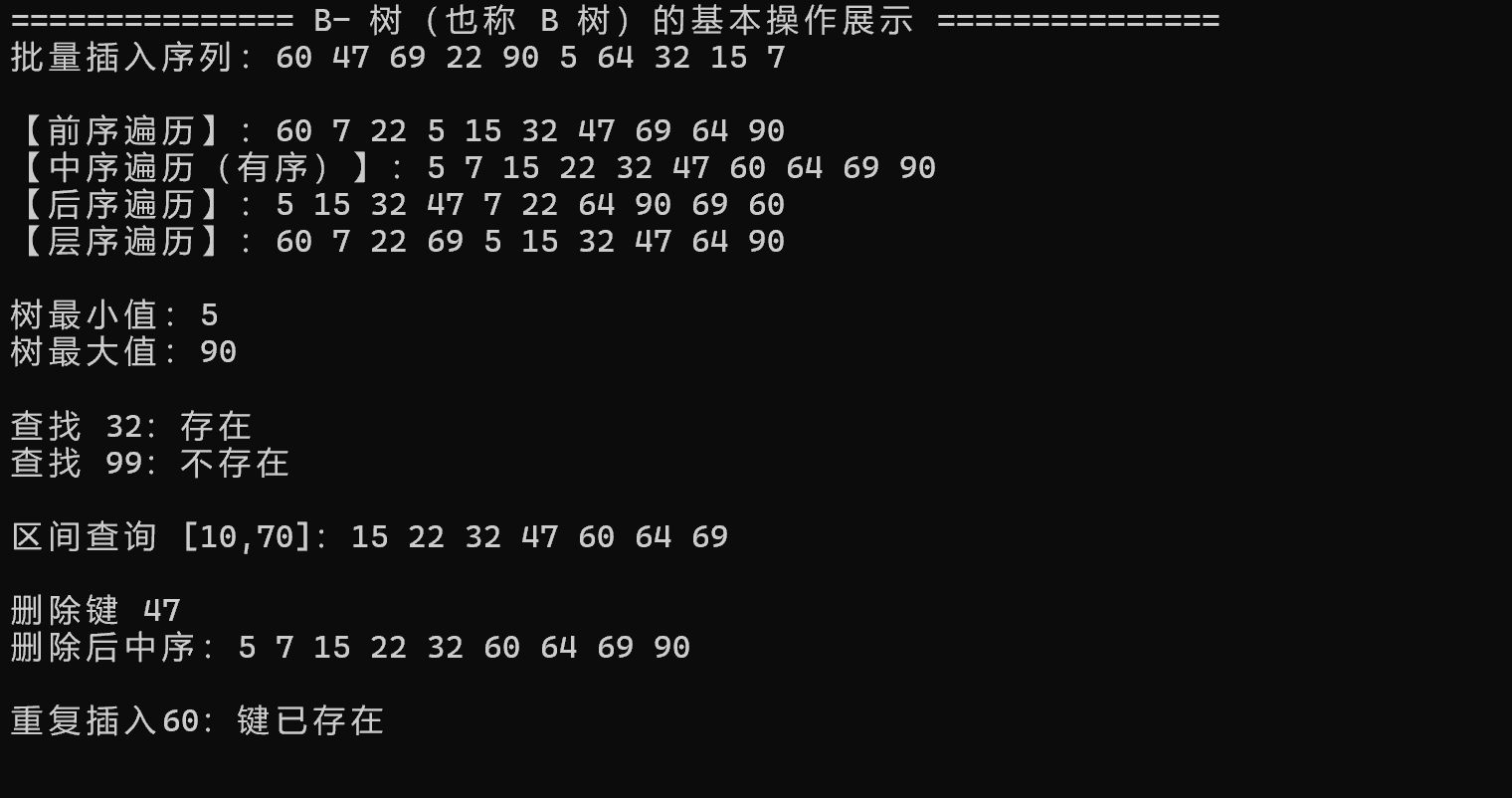
五、B 树为什么适合做磁盘索引?(底层核心原理)
- 减少磁盘 IO 次数 磁盘读写速度比内存慢上万倍,IO 是性能瓶颈;B 树单节点存大量索引,树高极低,百万数据仅 3~4 次磁盘读取。
- 磁盘页对齐设计 操作系统磁盘按「页」读写(通常 4KB/8KB),B 树一个节点刚好占一页,一次 IO 读完一整组索引,无碎片读取。
- 天然平衡,无退化风险 普通二叉树顺序插入会退化成链表,IO 暴增;B 树强制所有叶子同一高度,查询性能稳定无最坏情况。
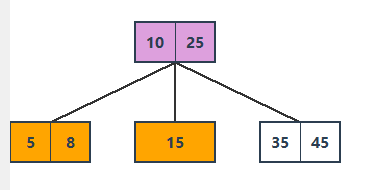
六、完整实操示例:4 阶 Base-0 B 树 插入全过程
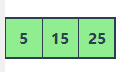
初始空树,依次插入:5,15,25,35,45,10
1.插入 5、15、25:根节点[5,15,25](3key,4 阶上限)
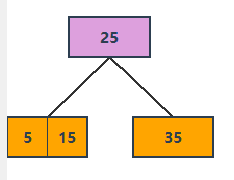
2.插入 35:节点溢出,mid=25 上移,分裂: 根[25],左叶子[5,15],右叶子[35]
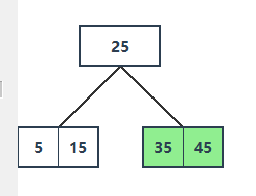
3.插入 45:右叶子[35,45],未达上限,直接插入
4.插入 10:左叶子[5,10,15],无溢出,稳定。最终树结构:
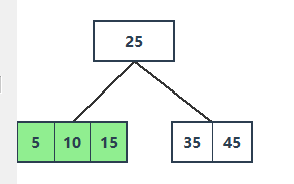
再插入 8,左叶子[5,8,10,15]满,分裂,mid=10 上移到根:
七、高频面试考点总结
- m 阶 B 树叶子节点层数完全一致,绝对平衡;
- 根节点子节点数特殊,其余节点有上下限;
- 插入只在叶子,溢出向上递归分裂;
- 删除欠载优先借 key,无 key 则合并,向上递归修正;
- B 树每个 key 都带数据,B + 树只有叶子带数据;
- 数据库不用 B 树而用 B + 树:范围查询、全表扫描效率碾压 B 树。
八、总结
本文系统介绍了B树的核心概念与实现原理。B树是一种多路平衡查找树,专为磁盘IO优化设计,通过节点存储多个索引大幅减少磁盘访问次数。文章详细解析了B树的阶数定义、节点结构、四大核心操作(查找/插入/删除/分裂合并)及其C++实现,包括基础结构体、查询函数、插入模块、删除模块和遍历函数。重点阐述了B树适合作为磁盘索引的底层原理:减少IO次数、磁盘页对齐设计和天然平衡特性。通过4阶B树的完整插入示例演示了实际操作过程,并总结了B树与B+树的区别及面试高频考点。B树凭借其稳定的查询性能和高效的磁盘利用率,成为数据库和文件系统索引的理想选择。

北京人形旗下天工造物具身智能开源社区,聚焦具身天工与慧思开物两大平台
更多推荐
 12
12 0
0- 0


 已为社区贡献34条内容

所有评论(0)