Go channel 死锁排查:从 goroutine 泄漏到并发模式最佳实践
Go channel 死锁排查:从 goroutine 泄漏到并发模式最佳实践
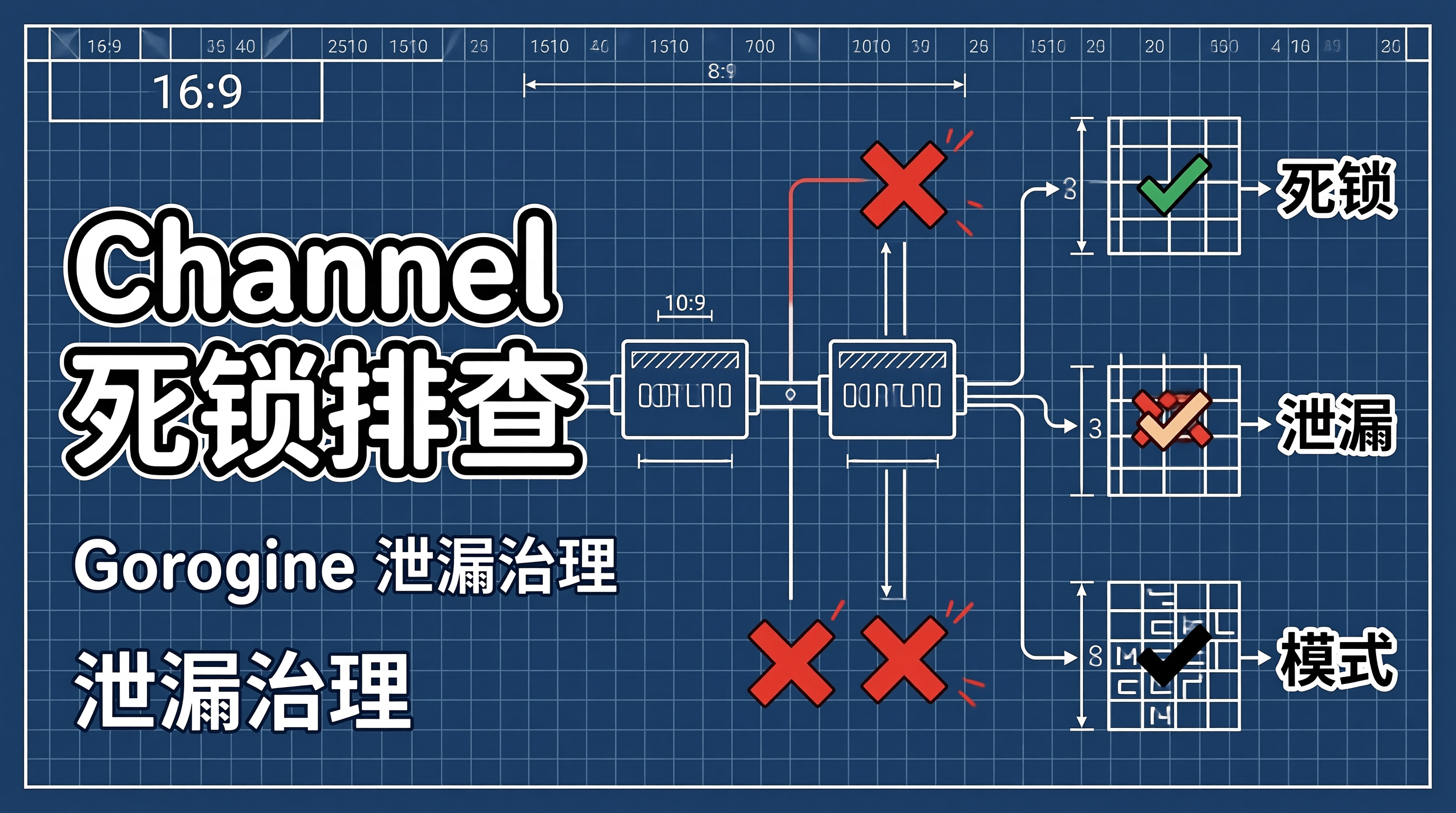
一、channel 死锁的隐蔽性:线上服务的"静默杀手"
Go 的 channel 是并发编程的核心原语,但不当使用会导致 goroutine 死锁或泄漏。与 crash 不同,死锁的 goroutine 不会产生任何错误日志,只是静默地停止工作,直到服务逐渐耗尽资源。某 API 网关在运行 72 小时后响应延迟从 50ms 飙升到 30s,排查发现是 3 个 goroutine 因 channel 死锁而泄漏,每天新增约 2000 个僵尸 goroutine,最终 GC 压力导致整个服务卡顿。
channel 死锁的常见模式包括:无缓冲 channel 的发送/接收不匹配、select 的 default 分支吞没数据、context 取消后未关闭 channel 导致接收方永久阻塞。
二、channel 死锁的典型模式与检测
flowchart TB
    A[channel 死锁模式] --> B[无缓冲 channel<br/>发送无接收]
    A --> C[无缓冲 channel<br/>接收无发送]
    A --> D[select default<br/>吞没数据]
    A --> E[context 取消<br/>未关闭 channel]
    A --> F[单向 channel<br/>方向误用]

    B --> G[goroutine 永久阻塞在发送]
    C --> H[goroutine 永久阻塞在接收]
    D --> I[数据丢失 + 逻辑错误]
    E --> J[接收方永久等待]
    F --> K[编译错误或运行时 panic]

    style G fill:#ffebee
    style H fill:#ffebee
    style I fill:#fff3e0
    style J fill:#ffebee
三、channel 并发模式的最佳实践与修复
// 死锁模式 1:无缓冲 channel 发送无接收
// ❌ 错误示例
func deadlockExample1() {
    ch := make(chan int) // 无缓冲 channel
    ch <- 42            // 永久阻塞:没有接收方
    fmt.Println(<-ch)
}

// ✅ 修复:使用带缓冲的 channel,或确保接收方先就绪
func fixedExample1() {
    ch := make(chan int, 1) // 缓冲区大小 1
    ch <- 42                // 不会阻塞
    fmt.Println(<-ch)
}

// 死锁模式 2:goroutine 泄漏 — 生产者退出但未关闭 channel
// ❌ 错误示例
func leakyProducer(ctx context.Context, ch chan<- int) {
    for i := 0; ; i++ {
        select {
        case ch <- i:
        case <-ctx.Done():
            return // 退出但未关闭 channel,接收方永久阻塞
        }
    }
}

// ✅ 修复:生产者退出时必须关闭 channel
func fixedProducer(ctx context.Context, ch chan<- int) {
    defer close(ch) // 确保退出时关闭 channel
    for i := 0; ; i++ {
        select {
        case ch <- i:
        case <-ctx.Done():
            return
        }
    }
}
// channel_orchestrator.go
// 生产级 channel 编排器:带超时、背压和泄漏检测

type ChannelOrchestrator[T any] struct {
    output      chan T
    errCh       chan error
    workers     int
    bufferSize  int
    timeout     time.Duration
    activeCount int64 // 原子计数器,用于泄漏检测
}

func NewOrchestrator[T any](workers, bufferSize int, timeout time.Duration) *ChannelOrchestrator[T] {
    return &ChannelOrchestrator[T]{
        output:     make(chan T, bufferSize),
        errCh:      make(chan error, workers),
        workers:    workers,
        bufferSize: bufferSize,
        timeout:    timeout,
    }
}

// Process 并发处理输入数据,结果通过 channel 输出
func (o *ChannelOrchestrator[T]) Process(
    ctx context.Context,
    inputs []T,
    handler func(context.Context, T) (T, error),
) <-chan T {
    // 使用 WaitGroup 跟踪所有 worker
    var wg sync.WaitGroup
    wg.Add(o.workers)

    // 创建带缓冲的输入 channel
    inputCh := make(chan T, o.bufferSize)

    // 启动 worker 池
    for i := 0; i < o.workers; i++ {
        go func() {
            defer wg.Done()
            atomic.AddInt64(&o.activeCount, 1)
            defer atomic.AddInt64(&o.activeCount, -1)

            for input := range inputCh {
                // 每个 task 有独立的超时控制
                taskCtx, cancel := context.WithTimeout(ctx, o.timeout)
                result, err := handler(taskCtx, input)
                cancel()

                if err != nil {
                    select {
                    case o.errCh <- err:
                    default: // 错误 channel 满了就丢弃,避免阻塞
                    }
                    continue
                }
                select {
                case o.output <- result:
                case <-ctx.Done():
                    return
                }
            }
        }()
    }

    // 发送输入数据
    go func() {
        defer close(inputCh) // 发送完毕后关闭,worker 会自然退出
        for _, input := range inputs {
            select {
            case inputCh <- input:
            case <-ctx.Done():
                return
            }
        }
    }()

    // 等待所有 worker 完成后关闭输出 channel
    go func() {
        wg.Wait()
        close(o.output)
        close(o.errCh)
    }()

    return o.output
}

// LeakCheck 检测是否有 goroutine 泄漏
func (o *ChannelOrchestrator[T]) LeakCheck() int {
    return int(atomic.LoadInt64(&o.activeCount))
}
// deadlock_detector.go
// 运行时死锁检测:基于 pprof 的 goroutine 泄漏监控

import (
    "runtime/pprof"
    "strings"
    "time"
)

type DeadlockDetector struct {
    interval      time.Duration
    threshold     int           // goroutine 数量阈值
    alertFunc     func(int, string)
    lastCount     int
}

func NewDeadlockDetector(
    interval time.Duration,
    threshold int,
    alertFunc func(int, string),
) *DeadlockDetector {
    return &DeadlockDetector{
        interval:  interval,
        threshold: threshold,
        alertFunc: alertFunc,
    }
}

// Start 启动后台监控
func (d *DeadlockDetector) Start(ctx context.Context) {
    ticker := time.NewTicker(d.interval)
    defer ticker.Stop()

    for {
        select {
        case <-ticker.C:
            count := d.checkGoroutines()
            // goroutine 数量持续增长且超过阈值,疑似泄漏
            if count > d.threshold && count > d.lastCount*2 {
                profile := d.dumpGoroutineProfile()
                d.alertFunc(count, profile)
            }
            d.lastCount = count
        case <-ctx.Done():
            return
        }
    }
}

func (d *DeadlockDetector) checkGoroutines() int {
    return runtime.NumGoroutine()
}

func (d *DeadlockDetector) dumpGoroutineProfile() string {
    var buf strings.Builder
    pprof.Lookup("goroutine").WriteTo(&buf, 1)
    return buf.String()
}
四、channel 并发模式的权衡与避坑
缓冲区大小的选择。无缓冲 channel 提供最强的同步语义,但容易死锁;大缓冲 channel 提高吞吐但可能掩盖生产消费不平衡问题。经验法则:缓冲区大小设为 worker 数量的 1-2 倍,既能吸收短暂的生产消费波动,又不会过度积压导致内存问题。
select + default 的陷阱。select { case ch <- v: ... default: ... } 在 channel 满时会走 default 分支,看起来避免了阻塞,实际上可能导致数据静默丢失。如果 default 分支只是简单重试,在高并发下会形成 CPU 空转。正确做法是使用带 context 的 select,在 context 取消时优雅退出。
channel 关闭的时机。关闭已关闭的 channel 会 panic,向已关闭的 channel 发送也会 panic。必须遵循"只有发送方关闭 channel"的原则,且确保只关闭一次。在多生产者场景中,使用 sync.Once 或最后一个退出的生产者负责关闭。
五、总结
channel 死锁和 goroutine 泄漏是 Go 并发编程中最常见也最隐蔽的问题。核心要点:生产者退出时必须关闭 channel,否则接收方永久阻塞;使用带缓冲 channel 缓解生产消费速率差异,但缓冲区不是万能药;运行时通过 pprof 监控 goroutine 数量,及时发现泄漏。落地建议:代码审查时重点检查 channel 的生命周期管理;上线前用 go test -race 检测数据竞争;生产环境部署 goroutine 数量监控告警。

北京人形旗下天工造物具身智能开源社区,聚焦具身天工与慧思开物两大平台
更多推荐
 3
3 0
0- 0


 已为社区贡献1条内容

所有评论(0)