【数据结构】线性表之——顺序表详细教学(附练习题)
文章目录
前言——线性表
线性表(linearlist)是n个具有相同特性的数据元素的有限序列。 线性表是⼀种在实际中⼴泛使⽤的数据结构,常⻅的线性表有:顺序表、链表、栈、队列、字符串… 。在数据结构中,线性表是一种最基本、最常用的数据结构。我们在实际生活中看到的许多列表(例如十二星座列表)都是线性表的一种体现。
一、 顺序表概述
顺序表(Sequential List) 是线性表(Linear List)最基础的存储结构,采用连续内存空间依次存储数据元素。作为数据结构学习的入门基石,理解顺序表对掌握更复杂结构至关重要。
而数组则是一种物理上连续存储数据的结构,顺序表正是利用数组实现的线性表。
二、存储结构
- 物理连续:元素存储在地址连续的内存单元中
- 逻辑相邻:元素的逻辑顺序与物理顺序严格一致
- 随机访问:支持通过下标直接访问元素(时间复杂度 O ( 1 ) O(1) O(1))
顺序表作为线性表的最基础存储结构,在数据结构学习中具有重要地位。接下来,我们将通过实际代码来逐步实现顺序表的相关操作。
三、基础操作的实现
1. 项目结构说明
为了实现顺序表的各种操作,我们将创建以下文件:
| SeqList.h(头文件) | 声明数据结构及各个操作函数的接口 |
|---|---|
| SeqList.c(源文件) | 提供顺序表各个函数的具体实现 |
| test.c(源文件) | 通过调用各个接口验证顺序表的正确性 |
2.静态顺序表
(1) 静态顺序表的结构定义
/在 SeqList.h 中,我们可以定义一个固定大小的顺序表结构
#define N 100
typedef int SLDataType;  // 方便我们修改顺序表中存储的数据类型

// 静态顺序表的定义
typedef struct SeqList {
    int a[N];
    int size; // 当前顺序表中存储的数据个数
} SL;
(2) 静态顺序表的缺陷
不难发现,静态顺序表采用固定大小的数组来存储数据,存在以下两个主要缺点:
空间浪费:如果预分配的数组空间过大,会造成内存浪费;
容量受限:如果预分配空间过小,则在数据量增多时无法满足需求。
静态顺序表虽然实现简单,但由于无法动态扩展,因此在实际应用中往往不够灵活。接下来将介绍动态顺序表,它能够根据需要动态扩容,解决静态顺序表的缺陷。
3. 动态顺序表
动态顺序表使用动态分配的内存来存储数据,不仅保留了数组的连续性,还能根据数据量自动扩容,极大地提高了灵活性。下面给出动态顺序表的完整实现示例。
SeqList.h
在头文件中,我们定义了动态顺序表的结构体和各个接口函数的声明
#pragma once
#include <stdio.h>
#include <stdlib.h>
#include <assert.h>  // 这些是之后实现函数将用到的头文件

typedef int SLDataType;

// 动态顺序表的结构定义
typedef struct SeqList {
	SLDataType* a;   // 动态分配的数组,用于存储数据
	int size;        // 当前顺序表中存储的数据个数
	int capacity;    // 数组的实际能够存储的数据个数
} SL;

// 动态顺序表的相关操作接口

// 初始化
void SeqListInit(SL* ps);
// 尾部插入
void SeqListPushBack(SL* ps, SLDataType x);
// 尾部删除
void SeqListPopBack(SL* ps);
// 头部插入
void SeqListPushFront(SL* ps, SLDataType x);
// 头部删除
void SeqListPopFront(SL* ps);
// 打印顺序表中的元素
void SeqListPrint(SL* ps);
// 销毁顺序表
void SeqListDestroy(SL* ps);
// 检查顺序表的容量
void SeqListCheckCapacity(SL* ps);

// 查找指定元素,找到返回下标,找不到返回 -1
int SeqListFind(SL* ps, SLDataType x);
// 在指定下标位置插入数据
void SeqListInsert(SL* ps, int pos, SLDataType x);
// 在指定下标位置删除数据
void SeqListErase(SL* ps, int pos);
SeqList.c
在实现文件中,我们逐一实现各个接口。
(1) 顺序表的初始化
SeqListInit:初始化顺序表,将指针置为空、容量和大小置 0。
#include "SeqList.h"  // 注意在 SeqList.c 和 test.c 都要预先包含此头文件

void SeqListInit(SL* ps) {
	ps->a = NULL;
	ps->capacity = ps->size = 0;
}
(2) 动态顺序表的扩容
SeqListCheckCapacity:当我们的顺序表需要插入元素但是发现空间不够时,可以调用此函数来进行扩容。
void SeqListCheckCapacity(SL* ps) {
	// 若当前空间不足,则进行扩容
	if (ps->size == ps->capacity) {

        // 如果顺序表为空,那么将大小置为 4,不为空,则扩容至原大小的两倍
		int newcapacity = ps->capacity == 0 ? 4 : ps->capacity * 2;

        // 开辟一个新的空间,大小为 newcapacity,并将原来的数组a的内容拷贝过来
		SLDataType* tmp = (SLDataType*)realloc(ps->a, newcapacity * sizeof(SLDataType));

        // 判断是否开辟失败
		if (tmp == NULL) {
			printf("realloc fail\n");
			exit(-1);
		}

        // 将原指针指向新开辟的内存地址,即完成扩容
		ps->a = tmp;
		ps->capacity = newcapacity;
	}
    // 注意这一整个函数体都是包在一个 if 语句内的
}
- 关于 realloc
// 函数声明
void* realloc (void* ptr, size_t size);

意思就是如果你对原来的空间扩容,如果原来的空间时空的话,那么
realloc的作用就相当于malloc。说明:为了避免频繁扩容,一般我们会选择扩容到原来的两倍
(3) 尾部插入元素
SeqListPushBack:尾部插入元素,首先检查空间,再将元素放到数组尾部。
void SeqListPushBack(SL* ps, SLDataType x) {
	SeqListCheckCapacity(ps);
	ps->a[ps->size] = x;
	ps->size++;
}
(4) 尾部删除元素
SeqListPopBack:尾部删除元素,注意如果顺序表本身为空就不能再删除了!所以删除前需要判断链表是否为空。
通常可以有两种方式判断是否为空:if 语句(温柔),assert函数(粗暴)。
void SeqListPopBack(SL* ps) {
	//if (ps->size > 0) {
	//	ps->size--;
	//}
    assert(ps->size > 0);
	ps->size--;
}
可以看到这里只需要将 size 的值减 1 即可,因为 size 实际上代表容器内有效数据的个数,之后的数据是什么都是无效的。
(5) 头部插入元素
SeqListPushFront:头部插入元素,需要将所有已有元素向后移动一位。
void SeqListPushFront(SL* ps, SLDataType x) {
	SeqListCheckCapacity(ps);
	int end = ps->size - 1;
	while (end >= 0) {
		ps->a[end + 1] = ps->a[end];
		--end;
	}
	ps->a[0] = x;
	ps->size++;
}
(6) 头部删除元素
SeqListPopFront:头部删除元素,删除后所有元素向前移动一位。
void SeqListPopFront(SL* ps) {
	assert(ps->size > 0);
	int begin = 1;
	while (begin < ps->size) {
		ps->a[begin - 1] = ps->a[begin];
		++begin;
	}
	ps->size--;
}
(7) 查找指定元素
SeqListFind:遍历顺序表查找指定元素,找到目标返回元素的下标,没有找到则返回 -1。
int SeqListFind(SL* ps, SLDataType x) {
	for (int i = 0; i < ps->size; ++i) {
		if (ps->a[i] == x) {
			return i;
		}
	}
	return -1;
}
(8) 指定位置插入元素
SeqListInsert:在指定下标位置插入数据,需先检查 pos 和是否需要扩容,再将后续元素后移。
pos:表示待插入元素插入后所在的下标,也可理解为在 pos 下标处之前插入指定元素。
void SeqListInsert(SL* ps, int pos, SLDataType x) {
	assert(pos >= 0 && pos <= ps->size);  // 注意都有取等,pos == size 时表示尾部插入
	SeqListCheckCapacity(ps);
	int end = ps->size - 1;
	while (end >= pos) {
		ps->a[end + 1] = ps->a[end];
		--end;
	}
	ps->a[pos] = x;
	ps->size++;
}
(9) 删除指定位置元素
SeqListErase:在指定位置删除数据,需检查 pos 和容器是否为空,再将后续元素前移。
pos:删除 pos 下标处的元素。
void SeqListErase(SL* ps, int pos) {
	assert(pos >= 0 && pos < ps->size);  // 注意这里 ps->size 一端不取等
    assert(ps->size > 0);
	int begin = pos + 1;
	while (begin < ps->size) {
		ps->a[begin - 1] = ps->a[begin];
		++begin;
	}
	ps->size--;
}
(10) 打印元素
SeqListPrint:遍历数组,打印所有存储的元素。
void SeqListPrint(SL* ps) {
	for (int i = 0; i < ps->size; ++i) {
		printf("%d ", ps->a[i]);
	}
}
(11) 释放顺序表
SeqListDestroy:释放动态分配的内存,并重置顺序表。
void SeqListDestroy(SL* ps) {
	free(ps->a);
	ps->a = NULL;
	ps->capacity = ps->size = 0;
}
(12) SeqList.c 完整代码
#include "SeqList.h"

void SeqListInit(SL* ps) {
	ps->a = NULL;
	ps->capacity = ps->size = 0;
}

void SeqListCheckCapacity(SL* ps) {
	if (ps->size == ps->capacity) {
		int newcapacity = ps->capacity == 0 ? 4 : ps->capacity * 2;
		SLDataType* tmp = (SLDataType*)realloc(ps->a, newcapacity * sizeof(SLDataType));

		if (tmp == NULL) {
			printf("realloc fail\n");
			exit(-1);
		}

		ps->a = tmp;
		ps->capacity = newcapacity;
	}
}

void SeqListPushBack(SL* ps, SLDataType x) {
	SeqListCheckCapacity(ps);

	ps->a[ps->size] = x;
	ps->size++;
}

void SeqListPopBack(SL* ps) {
	//if (ps->size > 0) {
	//	ps->size--;
	//}

	//或者下面这种方式
	assert(ps->size > 0);
	ps->size--;
}

void SeqListPushFront(SL* ps, SLDataType x) {
	SeqListCheckCapacity(ps);
	int end = ps->size - 1;
	while (end >= 0) {
		ps->a[end + 1] = ps->a[end];
		--end;
	}
	ps->a[0] = x;
	ps->size++;
}

void SeqListPopFront(SL* ps) {

	assert(ps->size > 0);

	int begin = 1;
	while (begin < ps->size) {
		ps->a[begin - 1] = ps->a[begin];
		++begin;
	}
	ps->size--;
}

void SeqListPrint(SL* ps) {
	for (int i = 0; i < ps->size; ++i) {
		printf("%d ", ps->a[i]);
	}
}

void SeqListDestroy(SL* ps) {
	free(ps->a);
	ps->a = NULL;
	ps->capacity = ps->size = 0;
}

int SeqListFind(SL* ps, SLDataType x) {
	for (int i = 0; i < ps->size; ++i) {
		if (ps->a[i] == x) {
			return i;
		}
	}
	return -1;
}

void SeqListInsert(SL* ps, int pos, SLDataType x) {

	assert(pos >= 0 && pos <= ps->size);  // 注意都有取等

	SeqListCheckCapacity(ps);
	int end = ps->size - 1;
	while (end >= pos) {
		ps->a[end + 1] = ps->a[end];
		--end;
	}

	ps->a[pos] = x;
	ps->size++;
}

void SeqListErase(SL* ps, int pos) {

	assert(pos >= 0 && pos < ps->size);  // size就没有等于了

	int begin = pos + 1;
	while (begin < ps->size) {
		ps->a[begin - 1] = ps->a[begin];
		++begin;
	}

	ps->size--;
}
test.c
在测试文件中,我们可以编写测试函数验证顺序表各项操作是否正确。下面给出一个简单的测试例子 SeqListTest,演示了尾部和头部插入删除操作,并打印结果:
#include "SeqList.h"

void SeqListTest() {
	SL s1;
	SeqListInit(&s1);
	// 尾部插入数据
	SeqListPushBack(&s1, 1);
	SeqListPushBack(&s1, 2);
	SeqListPushBack(&s1, 3);
	// 头部插入数据
	SeqListPushFront(&s1, 1);
	SeqListPushFront(&s1, 2);
	SeqListPushFront(&s1, 3);
	SeqListPushFront(&s1, 4);
	SeqListPushFront(&s1, 5);

SeqListPrint(&s1);
printf("\n");

// 头部删除两个元素
SeqListPopFront(&s1);
SeqListPopFront(&s1);

SeqListPrint(&s1);

}

int main() {
	SeqListTest();
	return 0;
}
运行结果:

四、 练习
移除元素
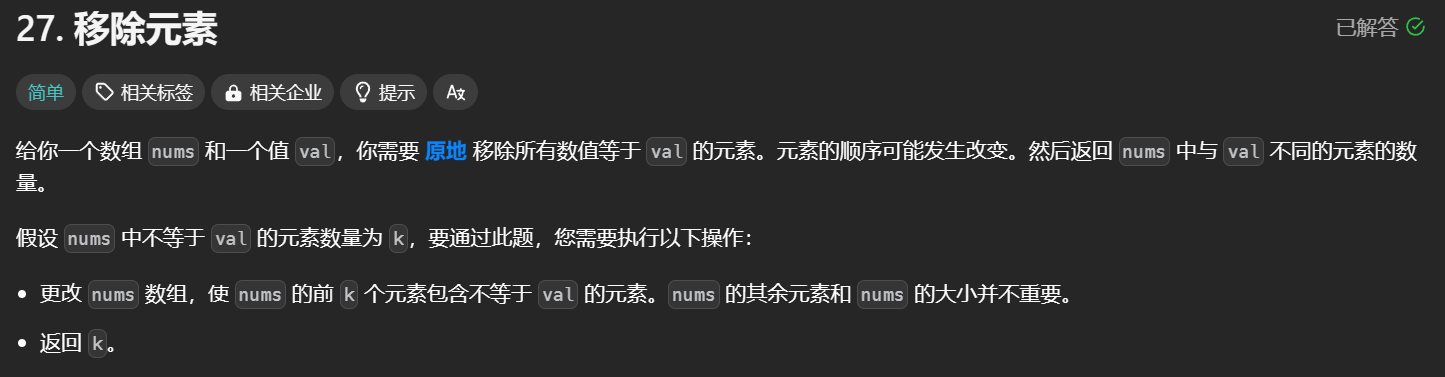
- 思路 1:暴力求解
找到所有的 val,一次一次地挪动数据覆盖删除,最坏的情况:数组内全部是 val。
时间复杂度: O ( N 2 ) O(N^2) O(N2),很显然,太慢了。
能否将时间复杂度优化至 O ( N ) O(N) O(N)?
- 思路 2:以空间换时间
遍历一次 nums 数组,把不是 val 的值,放到 tmp 数组,再把 tmp 数组的值拷贝回去。
时间复杂度: O ( N ) O(N) O(N),空间复杂度: O ( N ) O(N) O(N)。
emm… 能不能再将空间复杂度优化至 O ( 1 ) O(1) O(1)?可以的!
- 思路 3:双指针
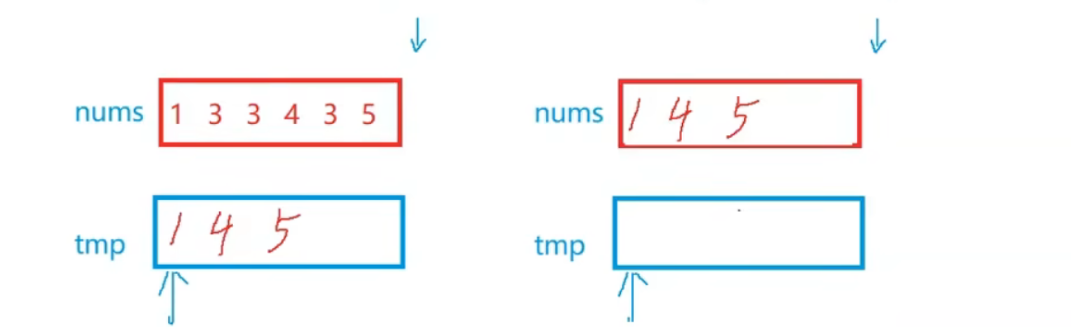
直接上代码
int removeElement(int* nums, int numsSize, int val) {
    int src = 0, dst = 0;
    while(src < numsSize){
        if(nums[src]!=val){
            nums[dst] = nums[src];
            src++;
            dst++;
        }
        else src++;
    }
    return dst;
}
删除有序数组中的重复项
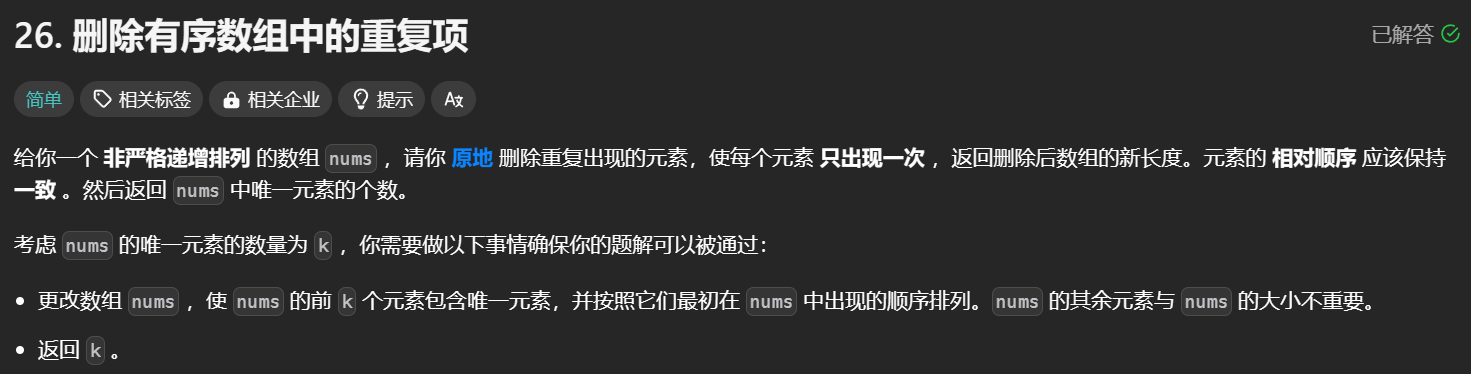

int removeDuplicates(int* nums, int numsSize) {
    if (numsSize == 0) return 0;  // 处理空数组情况

    int p1 = 0;  // 记录唯一元素存放的位置
    for (int p2 = 1; p2 < numsSize; ++p2) {
        if (nums[p1] != nums[p2]) {
            nums[++p1] = nums[p2];  // 只在遇到不同元素时才更新数组
        }
    }
    return p1 + 1;
}
合并两个有序数组

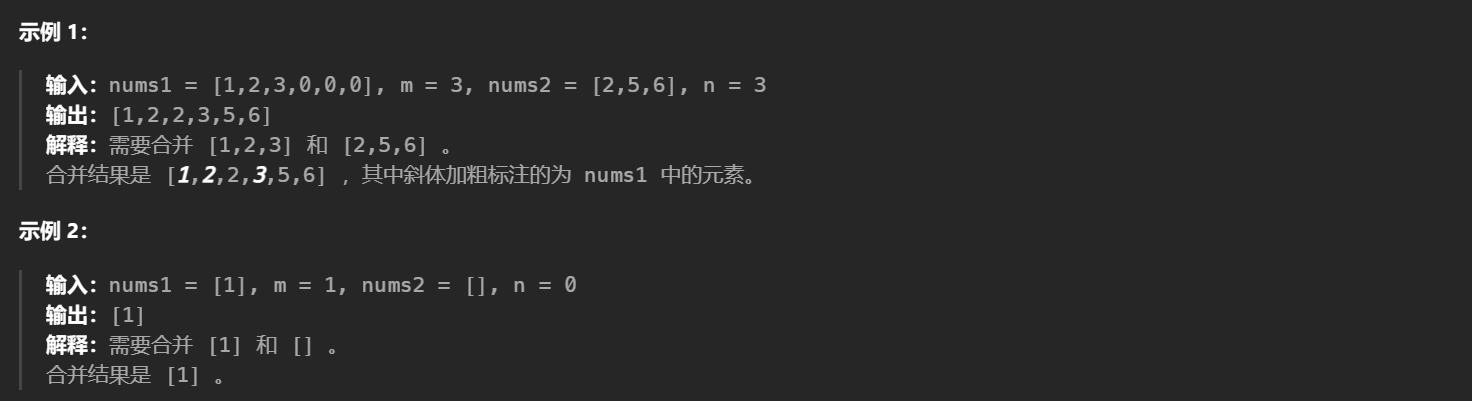
思路1:逆向归并
由于两个数组均已排好序,而且 nums1 有足够的空间存储两个数组的所有元素,所以可以逆向双指针策略,从两个数组的末尾开始比较,将较大的元素放入 nums1 的末尾。
void merge(int* nums1, int nums1Size, int m, int* nums2, int nums2Size, int n) {
    int end1 = m-1,end2 = n-1;
    int end = m+n-1;

    while(end1 >= 0 && end2 >=  0){
        if(nums1[end1]>nums2[end2]){
            nums1[end--]=nums1[end1--];
        }
        else{
            nums1[end--]=nums2[end2--];
        }
    }

    while(end2>=0){
        nums1[end--]=nums2[end2--];
    }
}
思路2:双指针
利用一个额外的数组 sorted 存储合并后的有序结果。通过两个指针从两个数组的起始位置开始比较,将较小的元素依次放入 sorted 数组中,最后再将 sorted 中的元素复制回 nums1。
void merge(int* nums1, int nums1Size, int m, int* nums2, int nums2Size, int n) {
    int p1 = 0, p2 = 0;
    int sorted[m + n];
    int cur;
    while (p1 < m || p2 < n) {
        if (p1 == m) {
            cur = nums2[p2++];
        } else if (p2 == n) {
            cur = nums1[p1++];
        } else if (nums1[p1] < nums2[p2]) {
            cur = nums1[p1++];
        } else {
            cur = nums2[p2++];
        }
        sorted[p1 + p2 - 1] = cur;
    }
    for (int i = 0; i != m + n; ++i) {
        nums1[i] = sorted[i];
    }
}
思路3:合并数组再排序
int cmp(int* a, int* b) {
    return *a - *b;
}

void merge(int* nums1, int nums1Size, int m, int* nums2, int nums2Size, int n) {
    for (int i = 0; i != n; ++i) {
        nums1[m + i] = nums2[i];
    }
    qsort(nums1, nums1Size, sizeof(int), cmp);
}
五、小结
本篇主要介绍了线性表中的其中一种类型——顺序表。并介绍了顺序表的概念、存储结构和基础操作,通过代码实现了顺序表的增删查改等一系列操作。但是就算有了动态存储的顺序表,它依然有很多缺陷:
- 空间不够了需要扩容,而扩容是需要付出代价的。
- 我们空间满了基本都是扩2倍,可能就会导致一些空间的浪费,比如我有100个数据满了,扩容到200个,但是我只需要插入5个数据,那么这样就浪费了95个空间。
- 顺序表要求数据从开头位置连续存储,那么我们在开头或者中间位置插入删除数据就需要挪动数据,效率不高。
那么针对顺序表的缺陷,于是便设计出了另一种线性表——【链表】(想要学习链表点这里!)。
数据结构之——顺序表【完】

北京人形旗下天工造物具身智能开源社区,聚焦具身天工与慧思开物两大平台
更多推荐
 27
27 0
0- 0


 已为社区贡献3条内容

所有评论(0)