牛客网面试必刷TOP101链表BM1 反转链表
描述
给定一个单链表的头结点pHead(该头节点是有值的,比如在下图,它的val是1),长度为n,反转该链表后,返回新链表的表头。
数据范围:0≤n≤1000
要求:空间复杂度 O(1) ,时间复杂度 O(n) 。
如当输入链表{1,2,3}时,
经反转后,原链表变为{3,2,1},所以对应的输出为{3,2,1}。
以上转换过程如下图所示:
示例1
输入:
{1,2,3}返回值:
{3,2,1}示例2
输入:
{}返回值:
{}说明:
空链表则输出空
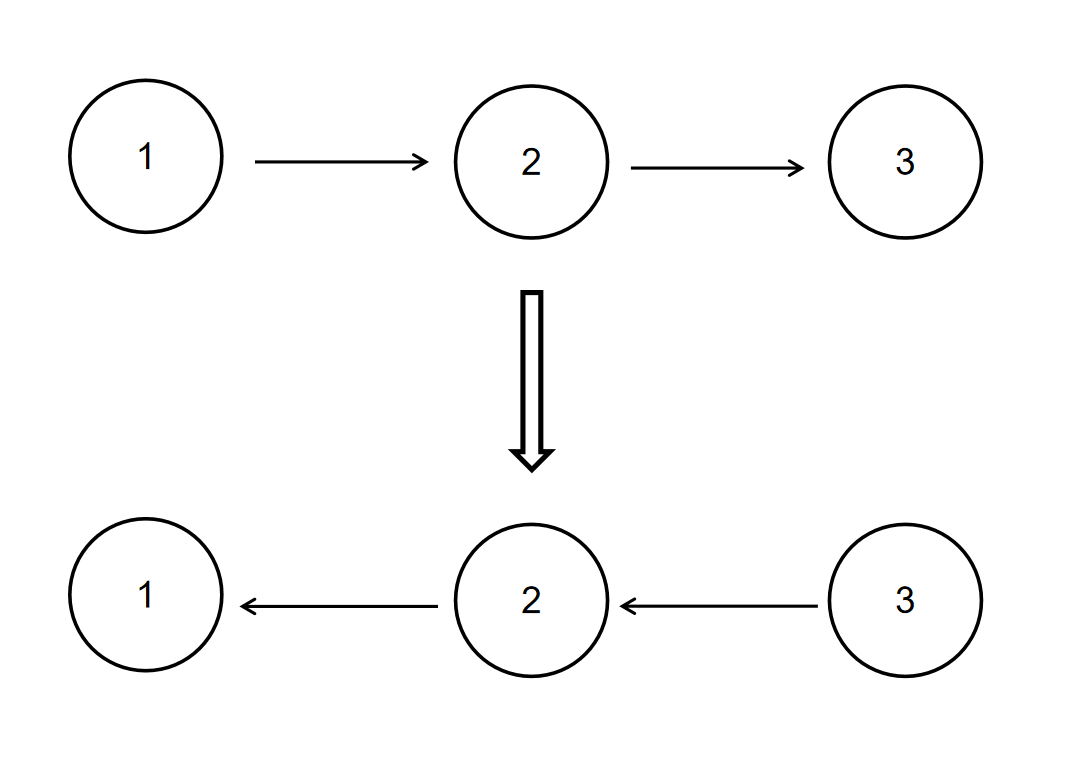
一、问题分析
首先读题,仔细看描述中的内容,发现需求是
1.给定一个单链表的头节点pHead
(该头节点是有值的,比如上图,它的val是1),
2.长度为n,
3.反转该链表后,
4.返回新链表的表头
5.数据范围:n大于等于0小于等于1000
6.要求:空间复杂度O(1),时间复杂度O(n)。
7.如当输入链表{1,2,3}时,经翻转后,原链表变为{3,2,1},所以对应的输出为{3,2,1}。
二、解题思路
1.因为需要反转链表,所以当前节点下一个节点的next要指向当前节点
比如1->2->3->NULL
如果我们反转链表,我们希望变成3->2->1->NULL
所以如果我们的头节点head的值是1,我们希望建立一个临时节点temp = head;
这个时候头节点和temp都是节点1
我们希望改变1的状态,让1的next变成NULL,并且让节点2的next变成1
我们为了不丢失下一个节点,我们需要建立一个临时节点tempnext = temp->next;
这样的话tempnext节点就是节点2,
我们先将节点1的状态改变,temp->next = NULL;
这样我们得到了temp:1->NULL和tempnext:2->3->NULL;
因为tempnext->next还有值,所以我们还需要记录tempnext->next的值为tempnextnext = tempnext->next;
然后我们使用tempnext->next = temp
这样我们得到了tempnext:2->1->NULL 和tempnextnext:3->NULL;
我们可以按照上面的逻辑,将temp = tempnext;
tempnext = tempnextnext;
然后当tempnext->next 不为NULL的时候我们重复
while(tempnext->next != NULL) {
tempnextnext = tempnext->next;
tempnext->next = temp;
temp = tempnext;
tempnext = tempnextnext;
}
最后如果出了循环证明是tempnext->next是NULL
我们将
tempnext->next指向temp就行了
然后返回tempnext
如果链表为空或者只有一个元素时候我们直接返回链表本身。
如果链表只有两个元素我们将第二个元素指向第一个元素,然后第一个元素指向NULL。
三个以上的情况用刚才的方法就可以了
三、具体步骤
使用的语言是C
/**
 * struct ListNode {
 *	int val;
 *	struct ListNode *next;
 * };
 */
/**
 * 代码中的类名、方法名、参数名已经指定,请勿修改,直接返回方法规定的值即可
 *
 *
 * @param head ListNode类
 * @return ListNode类
 */
struct ListNode* ReverseList(struct ListNode* head ) {
    // write code here
    if(head == NULL) {
        return head;
    }
    if(head->next == NULL) {
        return head;
    }
    struct ListNode* temp = head;
    struct ListNode* tempnext = temp->next;
    if(head->next->next == NULL) {
        tempnext->next = temp;
        temp->next = NULL;
        head = tempnext;
        return head;
    }
    struct ListNode* tempnextnext = tempnext->next;
    temp->next = NULL;
    tempnext->next = temp;
    temp = tempnext;
    tempnext = tempnextnext;
    while(tempnext->next != NULL) {
        tempnextnext = tempnext->next;
        tempnext->next = temp;
        temp = tempnext;
        tempnext = tempnextnext;
    }
    tempnext->next = temp;
    head = tempnext;
    return head;

}
/**
 * struct ListNode {
 *	int val;
 *	struct ListNode *next;
 * };
 */
/**
 * 代码中的类名、方法名、参数名已经指定,请勿修改,直接返回方法规定的值即可
 *
 *
 * @param head ListNode类
 * @return ListNode类
 */
struct ListNode* ReverseList(struct ListNode* head ) {
    // write code here
    if(head == NULL) return head;
    struct ListNode *pre = NULL;
    struct ListNode *cur = head;
    while(cur != NULL) {
        struct ListNode *next = cur->next;
        cur->next = pre;
        pre = cur;
        cur = next;
    }
    return pre;
}
看了官方题解之后简化了
如果输入为空直接返回原来的head
否则的话我们只要记住我们主要任务是将cur->next = pre;
然后不停更新cur pre的值,为此我们需要一个临时变量next存储我们下一个节点(因为如果不存储的话我们cur->next一旦改变我们会丢失下一个节点)
所以实际上我们需要不停更新pre cur next,然后cur指针不停指向pre(反转)(之前是pre->next = cur)
还有一点就是,我们一开始可以将pre这个节点设置为NULL,将当前节点cur设置为head,这样刚好反转过来之后我们最后一个节点指向NULL
1)pre = NULL;
2)cur = head;
NULL 1->2->3->NULL
pre cur
3)next = cur->next;
NULL 1-> 2->3->NULL
pre cur next
4)cur->next = pre;
NULL <-1 2->3->NULL
pre cur next
然后我们就不需要pre这个节点做什么了因为已经完成反转了
我们就可以更新pre为cur
5)pre = cur;
NULL<-1 2->3->NULL
cur next
pre
更新cur为next
6)cur = next;
NULL<-1 2->3->NULL
pre next
cur
更新next为next
7)next = next->next;
NULL<-1 2-> 3->NULL
pre cur next
8)然后重复4)-7)
cur->next = pre;
NULL<-1 <-2 3->NULL
pre cur next
pre = cur;
NULL<-1 <-2 3->NULL
cur next
pre
cur = next;
NULL<-1 <-2 3->NULL
pre next
cur
next = next->next;
NULL<-1 <-2 3->NULL
pre cur next
cur->next = pre;
NULL<-1 <-2 <-3 NULL
pre cur next
pre = cur;
NULL<-1 <-2 <-3 NULL
cur next
pre
cur = next;
NULL<-1 <-2 <-3 NULL
pre next
cur
(因为我们循环里写的是
while(cur != NULL) {
struct ListNode *next = cur->next;
cur->next = pre;
pre = cur;
cur = next;
}
所以必须执行到cur=next;)
所以这个时候我们返回的是pre而不是cur

北京人形旗下天工造物具身智能开源社区,聚焦具身天工与慧思开物两大平台
更多推荐
 20
20 0
0- 0


 已为社区贡献1条内容

所有评论(0)