【自然语言处理】基于双向循环神经网络的语言模型
目录
一、引言
双向循环神经网络语言模型是 “用两个方向的‘记忆阅读器’(正向 + 反向 RNN),同时抓句子的‘前文’和‘后文’信息,来判断句子通顺度或预测词语” 的模型,比单向模型更懂 “上下文逻辑”。本文依次讲解三种双向循环神经网络(BiRNN、BiLSTM、BiGRU)的算法以及Python代码完整实现。
二、基于双向循环神经网络的语言模型的算法
1. 循环神经网络(RNN)基础
RNN 是处理序列数据的神经网络,其核心是拥有循环连接,能够保留先前信息。
1.1 基本 RNN 公式
对于时间步t,RNN 的计算如下:

其中:
是t时刻的输入
是t时刻的隐藏状态
是输入到隐藏层的权重矩阵
是隐藏层到隐藏层的权重矩阵
,
是偏置项
- tanh是激活函数
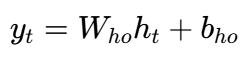
输出层计算:
1.2 双向 RNN
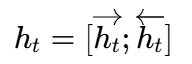
双向 RNN 同时从两个方向处理序列:

最终隐藏状态是两个方向的拼接:
2. 长短期记忆网络(LSTM)
LSTM 通过门控机制解决了传统 RNN 的梯度消失问题,能够捕捉长距离依赖关系。
2.1 LSTM 公式
LSTM 有三个门控和一个细胞状态:
-
遗忘门:决定从细胞状态中丢弃什么信息

-
输入门:决定哪些新信息被存放在细胞状态中

-
细胞状态更新:

-
输出门:决定输出什么值

其中:
- σ是 sigmoid 激活函数
- ∘表示元素 - wise 乘法
是细胞状态
2.2 双向 LSTM
与双向 RNN 类似,双向 LSTM 同时拥有正向和反向的 LSTM 单元,最终隐藏状态是两者的拼接。
3. 门控循环单元(GRU)
GRU 是 LSTM 的简化版本,使用更少的门控机制但通常表现相当。
3.1 GRU 公式
-
更新门:决定保留多少过去的信息

-
重置门:决定如何结合新输入和过去的记忆

-
候选隐藏状态:

-
隐藏状态更新:

4. 词嵌入(Word Embedding)
词嵌入将离散的词转换为连续的向量表示:

其中:
- onehot(wt)是词wt的独热编码
是嵌入矩阵
是词
的嵌入向量
5. 语言模型与损失函数
语言模型的目标是预测下一个词的概率,给定前面的词序列。
5.1 条件概率
对于序列 ,语言模型计算联合概率:

5.2 交叉熵损失
模型输出通过 softmax 转换为概率分布:

其中是模型对词w的输出分数。
损失函数使用交叉熵:

6. 反向传播与优化
6.1 通过时间的反向传播(BPTT)
RNN 的反向传播称为 BPTT,需要对时间步进行展开:
对于每个时间步t的参数梯度:
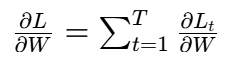
其中是时间步t的损失。
梯度计算使用链式法则:

6.2 Adam 优化器
Adam 优化器结合了动量法和 RMSprop 的优点:
-
计算一阶矩估计(动量):

-
计算二阶矩估计:

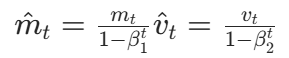
-
偏差修正:
-
参数更新:
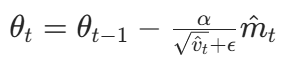
其中:
是当前梯度
,
是指数衰减率(通常取 0.9 和 0.999)
- α是学习率
- ϵ是防止除以零的小常数
7. 文本生成
文本生成使用贪婪搜索或随机采样:
- 给定初始序列,获取模型输出的概率分布
- 根据温度参数调整概率分布:
 其中τ是温度参数,控制采样的随机性
 - 根据调整后的概率分布采样下一个词
- 重复步骤 1-3 直到生成指定长度的文本
双向模型在文本生成上有局限性,因为标准生成是单向的(从过去到未来),而双向模型同时使用了未来信息。
三、基于双向循环神经网络的语言模型的Python代码
import numpy as np
import torch
import torch.nn as nn
import torch.optim as optim
from torch.utils.data import Dataset, DataLoader
import matplotlib.pyplot as plt
from matplotlib.animation import FuncAnimation
import seaborn as sns
import string
from collections import Counter
import random
import time
from tqdm import tqdm

# 设置随机种子,确保结果可复现
seed = 42
torch.manual_seed(seed)
np.random.seed(seed)
random.seed(seed)


# 数据准备
class TextDataset(Dataset):
    def __init__(self, text, seq_length=30):
        # 文本预处理
        self.text = text.lower()
        self.text = self.text.translate(str.maketrans('', '', string.punctuation))

        # 创建词汇表
        words = self.text.split()
        self.word_counts = Counter(words)
        self.vocab = sorted(self.word_counts, key=self.word_counts.get, reverse=True)
        self.vocab_size = len(self.vocab)

        # 词到索引的映射
        self.word_to_idx = {word: idx for idx, word in enumerate(self.vocab)}
        self.idx_to_word = {idx: word for idx, word in enumerate(self.vocab)}

        # 将文本转换为索引序列
        self.encoded_text = [self.word_to_idx[word] for word in words if word in self.word_to_idx]

        self.seq_length = seq_length
        self.num_sequences = len(self.encoded_text) // seq_length

        # 截断文本以形成完整的序列
        self.encoded_text = self.encoded_text[:self.num_sequences * self.seq_length]

    def __len__(self):
        return len(self.encoded_text) - self.seq_length

    def __getitem__(self, idx):
        # 对于双向语言模型,我们预测中心词,使用上下文作为输入
        # 这里简化为使用序列预测下一个词,但保留双向结构用于演示
        x = self.encoded_text[idx:idx + self.seq_length]
        y = self.encoded_text[idx + 1:idx + self.seq_length + 1]
        return torch.tensor(x, dtype=torch.long), torch.tensor(y, dtype=torch.long)


# 双向RNN语言模型
class BiRNNLanguageModel(nn.Module):
    def __init__(self, vocab_size, embedding_dim, hidden_dim, num_layers=2, dropout=0.2):
        super(BiRNNLanguageModel, self).__init__()
        self.embedding = nn.Embedding(vocab_size, embedding_dim)
        self.rnn = nn.RNN(embedding_dim, hidden_dim, num_layers=num_layers,
                          bidirectional=True, batch_first=True, dropout=dropout)
        self.fc = nn.Linear(hidden_dim * 2, vocab_size)  # *2 因为双向
        self.hidden_dim = hidden_dim
        self.num_layers = num_layers

    def forward(self, x, hidden=None):
        batch_size = x.size(0)

        # 初始化隐藏状态
        if hidden is None:
            hidden = torch.zeros(self.num_layers * 2, batch_size, self.hidden_dim, device=x.device)

        # 嵌入层
        x_embed = self.embedding(x)

        # RNN层
        out, hidden = self.rnn(x_embed, hidden)

        # 输出层
        logits = self.fc(out)

        return logits, hidden


# 双向LSTM语言模型
class BiLSTMLanguageModel(nn.Module):
    def __init__(self, vocab_size, embedding_dim, hidden_dim, num_layers=2, dropout=0.2):
        super(BiLSTMLanguageModel, self).__init__()
        self.embedding = nn.Embedding(vocab_size, embedding_dim)
        self.lstm = nn.LSTM(embedding_dim, hidden_dim, num_layers=num_layers,
                            bidirectional=True, batch_first=True, dropout=dropout)
        self.fc = nn.Linear(hidden_dim * 2, vocab_size)  # *2 因为双向
        self.hidden_dim = hidden_dim
        self.num_layers = num_layers

    def forward(self, x, hidden=None):
        batch_size = x.size(0)

        # 初始化隐藏状态和细胞状态
        if hidden is None:
            h0 = torch.zeros(self.num_layers * 2, batch_size, self.hidden_dim, device=x.device)
            c0 = torch.zeros(self.num_layers * 2, batch_size, self.hidden_dim, device=x.device)
            hidden = (h0, c0)

        # 嵌入层
        x_embed = self.embedding(x)

        # LSTM层
        out, hidden = self.lstm(x_embed, hidden)

        # 输出层
        logits = self.fc(out)

        return logits, hidden


# 双向GRU语言模型
class BiGRULanguageModel(nn.Module):
    def __init__(self, vocab_size, embedding_dim, hidden_dim, num_layers=2, dropout=0.2):
        super(BiGRULanguageModel, self).__init__()
        self.embedding = nn.Embedding(vocab_size, embedding_dim)
        self.gru = nn.GRU(embedding_dim, hidden_dim, num_layers=num_layers,
                          bidirectional=True, batch_first=True, dropout=dropout)
        self.fc = nn.Linear(hidden_dim * 2, vocab_size)  # *2 因为双向
        self.hidden_dim = hidden_dim
        self.num_layers = num_layers

    def forward(self, x, hidden=None):
        batch_size = x.size(0)

        # 初始化隐藏状态
        if hidden is None:
            hidden = torch.zeros(self.num_layers * 2, batch_size, self.hidden_dim, device=x.device)

        # 嵌入层
        x_embed = self.embedding(x)

        # GRU层
        out, hidden = self.gru(x_embed, hidden)

        # 输出层
        logits = self.fc(out)

        return logits, hidden


# 训练函数
def train_model(model, train_loader, criterion, optimizer, num_epochs, device,
                val_loader=None, visualize=True):
    model.to(device)
    model.train()

    # 记录训练过程
    history = {
        'train_loss': [],
        'val_loss': [] if val_loader else None
    }

    # 可视化设置
    if visualize:
        plt.ion()
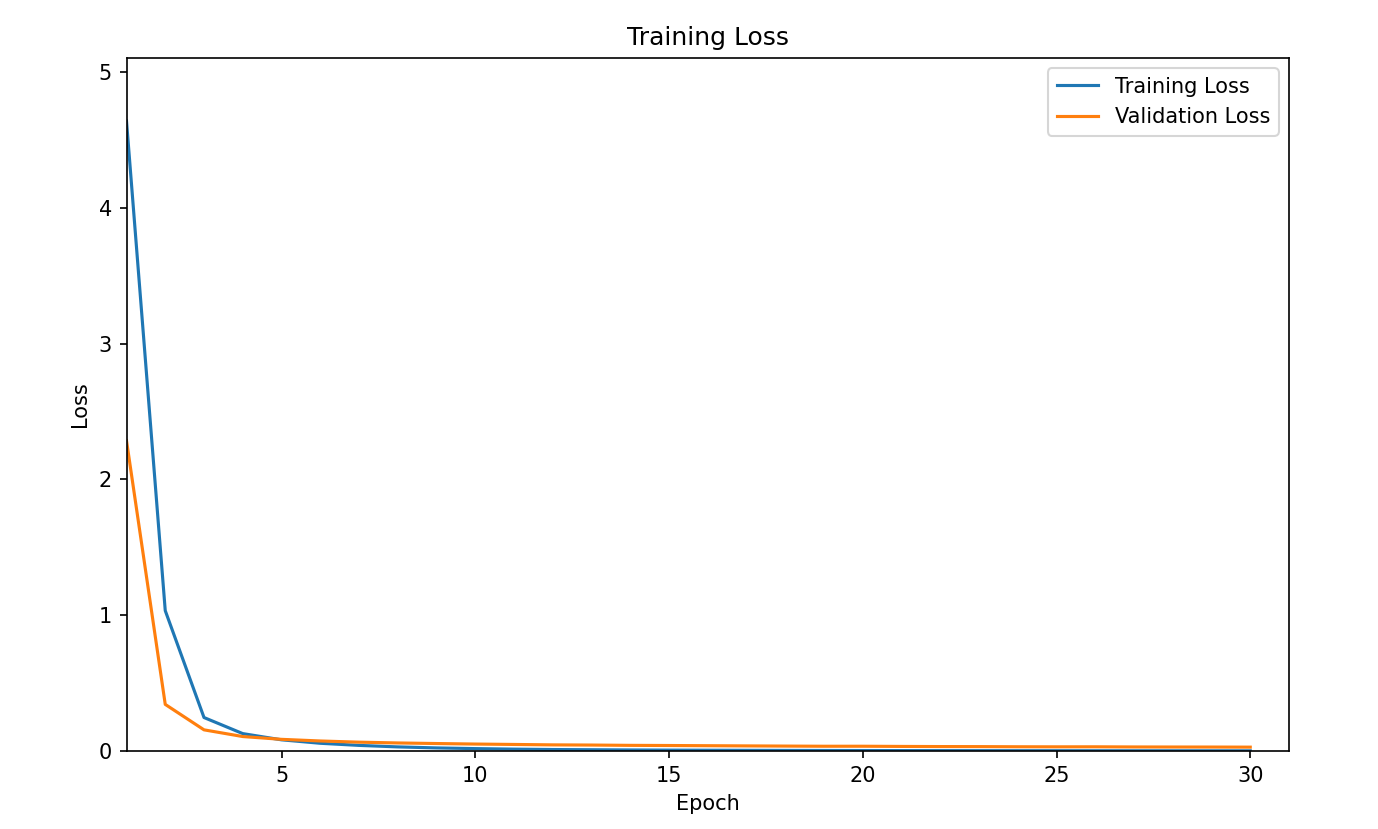
        fig, ax = plt.subplots(figsize=(10, 6))
        ax.set_title('Training Loss')
        ax.set_xlabel('Epoch')
        ax.set_ylabel('Loss')
        train_line, = ax.plot([], [], label='Training Loss')
        val_line = ax.plot([], [], label='Validation Loss')[0] if val_loader else None
        ax.legend()
        fig.canvas.draw()

    start_time = time.time()

    for epoch in range(num_epochs):
        total_loss = 0.0
        progress_bar = tqdm(train_loader, desc=f'Epoch {epoch + 1}/{num_epochs}')

        for x, y in progress_bar:
            x, y = x.to(device), y.to(device)

            # 前向传播
            optimizer.zero_grad()
            logits, _ = model(x)

            # 计算损失
            loss = criterion(logits.transpose(1, 2), y)  # 调整维度以匹配损失函数要求

            # 反向传播和优化
            loss.backward()
            optimizer.step()

            total_loss += loss.item()
            progress_bar.set_postfix({'loss': loss.item()})

        # 计算平均损失
        avg_train_loss = total_loss / len(train_loader)
        history['train_loss'].append(avg_train_loss)

        # 验证
        if val_loader:
            model.eval()
            val_loss = 0.0
            with torch.no_grad():
                for x, y in val_loader:
                    x, y = x.to(device), y.to(device)
                    logits, _ = model(x)
                    loss = criterion(logits.transpose(1, 2), y)
                    val_loss += loss.item()

            avg_val_loss = val_loss / len(val_loader)
            history['val_loss'].append(avg_val_loss)
            model.train()

        # 打印 epoch 结果
        print(f'Epoch {epoch + 1}/{num_epochs}')
        print(f'Train Loss: {avg_train_loss:.4f}')
        if val_loader:
            print(f'Val Loss: {avg_val_loss:.4f}')
        print('-' * 50)

        # 更新可视化
        if visualize:
            train_line.set_data(range(1, epoch + 2), history['train_loss'])
            ax.set_xlim(1, epoch + 2)
            ax.set_ylim(0, max(history['train_loss']) * 1.1)

            if val_loader and val_line:
                val_line.set_data(range(1, epoch + 2), history['val_loss'])

            fig.canvas.draw()
            plt.pause(0.1)

    # 训练结束后关闭交互模式
    if visualize:
        plt.ioff()
        plt.show()

    end_time = time.time()
    print(f'Training complete in {end_time - start_time:.2f} seconds')

    return model, history


# 可视化隐藏状态
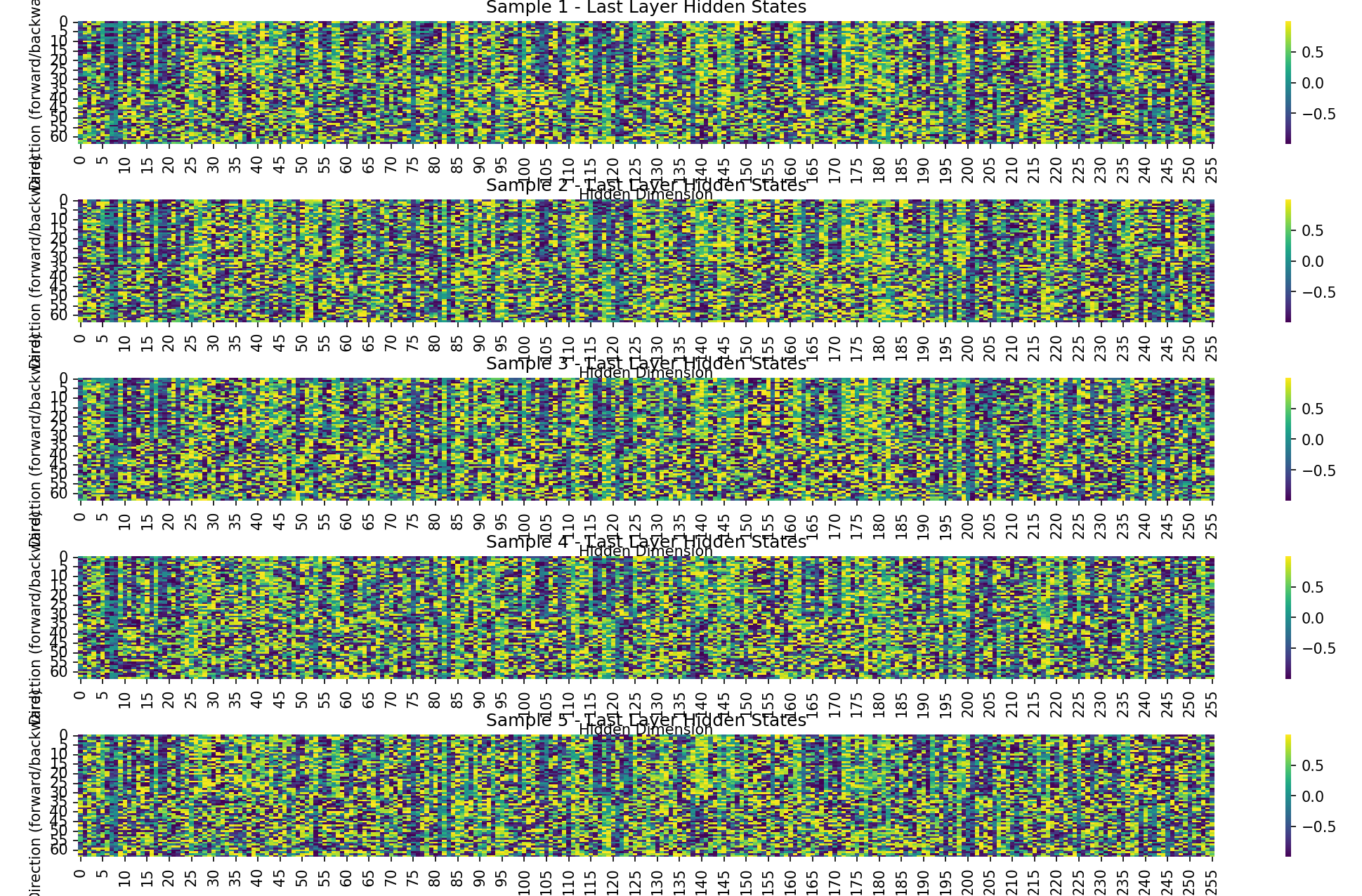
def visualize_hidden_states(model, data_loader, device, num_samples=5):
    model.eval()
    samples = []

    with torch.no_grad():
        for i, (x, _) in enumerate(data_loader):
            if i >= num_samples:
                break

            x = x.to(device)
            _, hidden = model(x)

            # 根据模型类型处理隐藏状态
            if isinstance(model, BiLSTMLanguageModel):
                # LSTM有两个状态: (h, c)
                h, c = hidden
                hidden_state = h.cpu().numpy()
            else:
                # RNN和GRU只有一个隐藏状态
                hidden_state = hidden.cpu().numpy()

            samples.append(hidden_state)

    # 绘制隐藏状态热图
    fig, axes = plt.subplots(num_samples, 1, figsize=(12, 3 * num_samples))
    if num_samples == 1:
        axes = [axes]

    for i, hidden in enumerate(samples):
        # 取最后一层的隐藏状态
        last_layer_hidden = hidden[-2:, :, :]  # 双向,所以取最后两层
        last_layer_hidden = last_layer_hidden.reshape(-1, last_layer_hidden.shape[-1])

        sns.heatmap(last_layer_hidden, ax=axes[i], cmap='viridis')
        axes[i].set_title(f'Sample {i + 1} - Last Layer Hidden States')
        axes[i].set_xlabel('Hidden Dimension')
        axes[i].set_ylabel('Direction (forward/backward)')

    plt.tight_layout()
    plt.show()


# 生成文本(注意:双向模型不适合标准文本生成,但这里展示如何使用)
def generate_text(model, start_text, dataset, length=50, temperature=1.0, device='cpu'):
    model.eval()
    words = start_text.lower().split()
    words = [word for word in words if word in dataset.word_to_idx]

    if not words:
        return "No valid words in start text"

    encoded = [dataset.word_to_idx[word] for word in words]

    with torch.no_grad():
        for _ in range(length):
            x = torch.tensor(encoded[-dataset.seq_length:], dtype=torch.long).unsqueeze(0).to(device)
            logits, _ = model(x)

            # 取最后一个时间步的输出
            logits = logits[:, -1, :] / temperature
            probs = torch.softmax(logits, dim=1)

            # 采样下一个词
            next_idx = torch.multinomial(probs, num_samples=1).item()
            encoded.append(next_idx)

    return ' '.join([dataset.idx_to_word[idx] for idx in encoded])


# 主函数
def main():
    # 设备设置
    device = torch.device('cuda' if torch.cuda.is_available() else 'cpu')
    print(f'Using device: {device}')

    with open('Economic Globalization.txt', 'r', encoding='utf-8') as f:
        text = f.read()

    # 创建数据集和数据加载器
    seq_length = 30
    dataset = TextDataset(text, seq_length)

    # 分割训练集和验证集
    train_size = int(0.8 * len(dataset))
    val_size = len(dataset) - train_size
    train_dataset, val_dataset = torch.utils.data.random_split(
        dataset, [train_size, val_size]
    )

    batch_size = 32
    train_loader = DataLoader(train_dataset, batch_size=batch_size, shuffle=True)
    val_loader = DataLoader(val_dataset, batch_size=batch_size, shuffle=False)

    print(f'Vocabulary size: {dataset.vocab_size}')
    print(f'Training samples: {len(train_dataset)}')
    print(f'Validation samples: {len(val_dataset)}')

    # 模型参数
    embedding_dim = 128
    hidden_dim = 256
    num_layers = 2
    dropout = 0.3
    num_epochs = 30
    learning_rate = 0.001

    # 创建模型、损失函数和优化器
    models = {
        'BiRNN': BiRNNLanguageModel(
            dataset.vocab_size, embedding_dim, hidden_dim, num_layers, dropout
        ),
        'BiLSTM': BiLSTMLanguageModel(
            dataset.vocab_size, embedding_dim, hidden_dim, num_layers, dropout
        ),
        'BiGRU': BiGRULanguageModel(
            dataset.vocab_size, embedding_dim, hidden_dim, num_layers, dropout
        )
    }

    # 选择一个模型进行训练(可以切换)
    model_name = 'BiLSTM'  # 可选: 'BiRNN', 'BiLSTM', 'BiGRU'
    model = models[model_name]

    criterion = nn.CrossEntropyLoss()
    optimizer = optim.Adam(model.parameters(), lr=learning_rate)

    # 训练模型
    print(f'Training {model_name}...')
    trained_model, history = train_model(
        model, train_loader, criterion, optimizer, num_epochs, device, val_loader
    )

    # 可视化隐藏状态
    visualize_hidden_states(trained_model, val_loader, device)

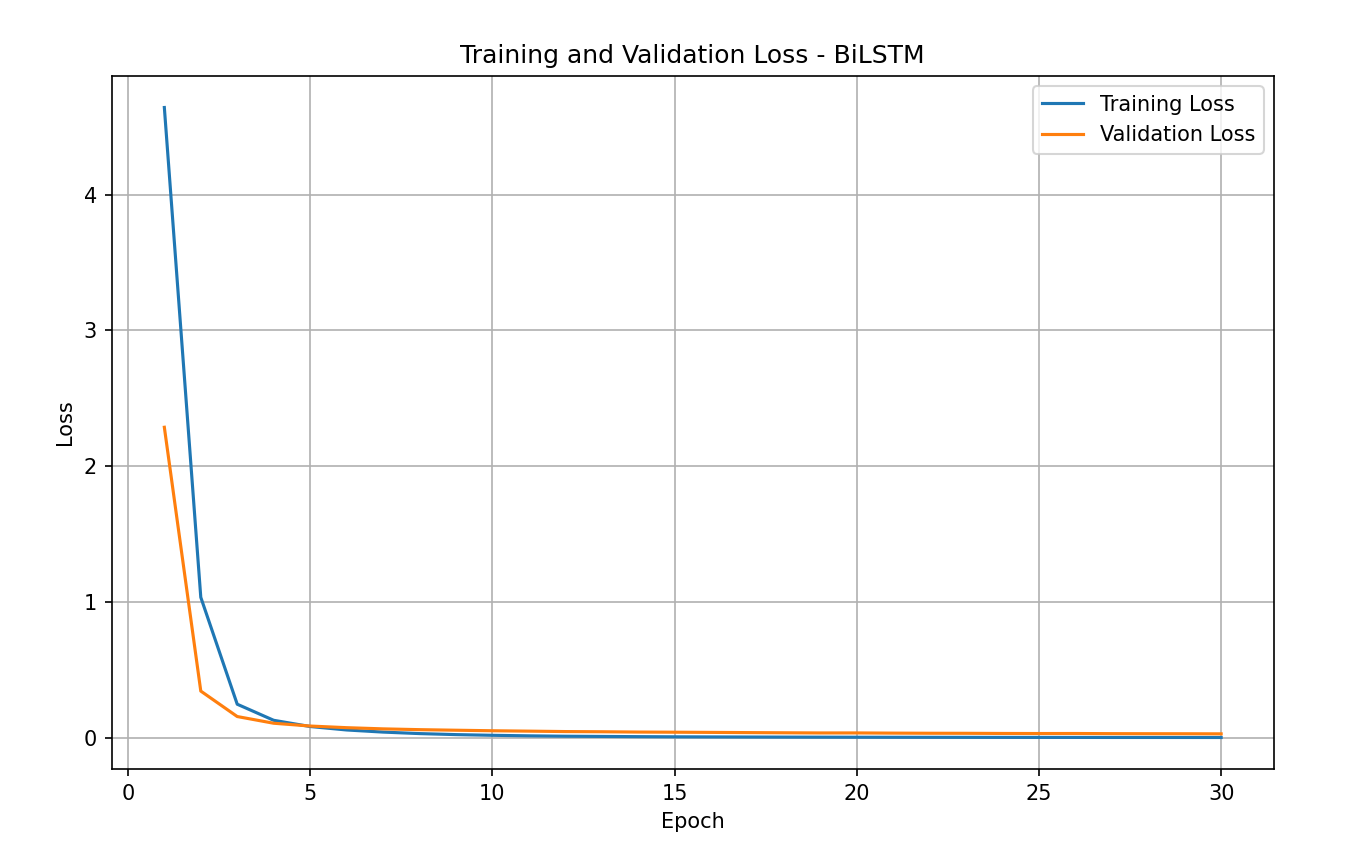
    # 绘制最终的损失曲线
    plt.figure(figsize=(10, 6))
    plt.plot(range(1, num_epochs + 1), history['train_loss'], label='Training Loss')
    if history['val_loss']:
        plt.plot(range(1, num_epochs + 1), history['val_loss'], label='Validation Loss')
    plt.title(f'Training and Validation Loss - {model_name}')
    plt.xlabel('Epoch')
    plt.ylabel('Loss')
    plt.legend()
    plt.grid(True)
    plt.show()

    # 生成文本(注意:双向模型不适合标准文本生成,结果可能不理想)
    start_text = "to be or not to be"
    generated_text = generate_text(trained_model, start_text, dataset, length=30, device=device)
    print("\nGenerated Text:")
    print(generated_text)


if __name__ == "__main__":
    main()
代码中的 作为训练语料库(也可以替换其他英文文本),内容如下:
Economic globalization refers to the increasing interdependence of world economies through the cross-border
flow of goods, services, technology, capital, and labor. It is not a new phenomenon but has accelerated dramatically
over the past century, reshaping societies, economies, and cultures across the globe. This process has been driven
by a complex interplay of technological advancements, policy shifts, and evolving economic systems, each contributing
to the interconnected world we live in today. To understand economic globalization fully, we must examine its
historical roots, key drivers, multifaceted impacts, and the challenges it presents to nations and communities
worldwide.
The origins of economic globalization can be traced back to ancient trade routes, such as the Silk Road, which
connected distant civilizations through the exchange of spices, textiles, and ideas. However, the modern form of
globalization began to take shape during the 19th century, fueled by the Industrial Revolution. Innovations in
transportation—including steamships and railroads—reduced the cost of moving goods across long distances, while
advancements in communication, such as the telegraph, enabled faster exchange of information. During this era,
European powers expanded their colonial empires, creating global networks of resource extraction and trade that laid
the groundwork for future economic integration. By the late 19th century, the world had seen a surge in international
trade, with goods like cotton, rubber, and metals flowing across continents to feed industrial demand in Europe and
North America.
The early 20th century brought significant disruptions to globalization, including two world wars and the Great
Depression. These crises led to a rise in protectionist policies, as nations imposed high tariffs and trade barriers
to shield their economies from external shocks. For much of the mid-20th century, the world remained divided by
geopolitical tensions, particularly during the Cold War, which created separate economic blocs in the East and West.
However, the end of World War II also sowed the seeds for a new era of globalization. In 1944, representatives from
44 nations gathered in Bretton Woods, New Hampshire, to establish a framework for post-war economic cooperation.
This meeting resulted in the creation of institutions like the International Monetary Fund (IMF) and the World Bank,
designed to stabilize global financial markets and provide loans for reconstruction and development. The General
Agreement on Tariffs and Trade (GATT), established in 1947, further promoted free trade by reducing tariffs through
multilateral negotiations.
The collapse of the Soviet Union in 1991 marked a turning point in economic globalization, as former communist
countries began to integrate into the global economy. This period saw a wave of liberalization, with nations across
Asia, Africa, and Latin America adopting market-oriented reforms, privatizing state-owned enterprises, and opening
their borders to foreign investment. Concurrently, rapid advancements in technology—particularly the internet and
digital communication—revolutionized how businesses operate. The internet enabled instant communication across
borders, allowing companies to manage global supply chains more efficiently and reach customers worldwide. Meanwhile,
breakthroughs in transportation, such as containerization, reduced shipping costs and made it feasible to produce
goods in one country and sell them in another halfway across the world.
One of the most significant drivers of economic globalization has been the rise of multinational corporations (MNCs).
These large enterprises operate in multiple countries, with production facilities, offices, and markets spread across
continents. MNCs seek to maximize profits by leveraging differences in labor costs, resource availability, and
regulatory environments. For example, a company might design a product in the United States, source raw materials
from Africa, assemble components in China, and sell the final product in Europe. This global division of labor allows
firms to reduce costs and increase efficiency, but it also ties economies together, making them vulnerable to
disruptions in any part of the supply chain. Today, MNCs play a dominant role in the global economy, with many
generating revenues larger than the GDP of small nations.
International trade has been a cornerstone of economic globalization, with the volume of global trade growing
exponentially since the 1990s. The World Trade Organization (WTO), established in 1995 to replace GATT, has played a
key role in this expansion by enforcing trade rules, resolving disputes, and negotiating new agreements to reduce
barriers. Regional trade blocs, such as the European Union (EU), the North American Free Trade Agreement (NAFTA,
later replaced by USMCA), and the Association of Southeast Asian Nations (ASEAN), have further integrated markets by
eliminating tariffs and harmonizing regulations among member states. These agreements have facilitated the flow of
goods and services, allowing countries to specialize in the production of goods they can produce most efficiently—a
concept known as comparative advantage. For instance, countries with abundant agricultural land focus on farming,
while those with skilled labor forces specialize in technology and manufacturing.
Financial globalization has also accelerated in recent decades, with capital flowing more freely across borders than
ever before. Advances in financial technology have made it easier for investors to buy stocks, bonds, and other
assets in foreign markets, while multinational banks provide loans and financial services to clients worldwide.
This integration of financial markets has helped channel investment to developing countries, supporting economic
growth and infrastructure development. However, it has also increased the risk of financial contagion, where a crisis
in one country can quickly spread to others. The 2008 global financial crisis, which began with the collapse of the
US housing market, demonstrated this vulnerability, as banks and economies around the world faced severe losses due
to their interconnected financial ties.
Technological diffusion is another critical aspect of economic globalization. Innovations developed in one country
quickly spread to others, driven by trade, foreign investment, and the movement of skilled workers. For example,
advancements in renewable energy technology, such as solar panels and wind turbines, have been adopted globally,
helping nations transition to cleaner energy sources. Similarly, digital technologies like mobile payment systems
and e-commerce platforms have transformed how businesses operate and how consumers interact, even in remote regions.
This spread of technology has the potential to reduce the gap between developed and developing countries, but it also
raises concerns about intellectual property rights and the concentration of technological power in the hands of a few
large corporations.
Economic globalization has brought significant benefits to many countries and communities. For developed nations, it
has provided access to cheaper goods, new markets for exports, and opportunities for investment. Consumers in wealthy
countries can purchase products from around the world at lower prices, increasing their standard of living. For
developing countries, globalization has offered a path to economic growth through export-led industrialization.
Nations like China, South Korea, and Vietnam have lifted millions of people out of poverty by integrating into global
supply chains and attracting foreign investment. These countries have seen rapid industrialization, improved
infrastructure, and rising incomes as they become key players in global trade.
However, the benefits of globalization have not been distributed equally. While some countries and individuals have
thrived, others have been left behind. In developed nations, deindustrialization has occurred as manufacturing jobs
move to countries with lower labor costs, leading to job losses and economic decline in traditional industrial
regions. This has contributed to rising inequality, as workers in low-skill jobs face stagnant wages, while those in
high-skill, knowledge-based industries see their incomes rise. In developing countries, the benefits of globalization
have often been concentrated in urban areas and among educated elites, while rural communities and marginalized groups
remain trapped in poverty. Additionally, some countries have become overly dependent on exports, making their
economies vulnerable to fluctuations in global demand.
Cultural globalization is another byproduct of economic integration, as the flow of goods, media, and people across
borders spreads ideas, values, and cultural practices. Western brands, music, movies, and fast-food chains have
become ubiquitous in many parts of the world, leading to concerns about cultural homogenization. Critics argue that
local traditions, languages, and cuisines are being eroded as global culture dominates. Proponents, however, view
cultural exchange as a positive force, fostering greater understanding and tolerance among diverse societies. The
spread of social media has further accelerated cultural globalization, allowing people to connect with others around
the world and share ideas instantaneously.
Environmental impacts are a growing concern in the era of economic globalization. The increased movement of goods
has led to a surge in carbon emissions from transportation, contributing to climate change. Industrial production,
often concentrated in countries with lax environmental regulations, has caused pollution and deforestation,
affecting local ecosystems and public health. For example, manufacturing hubs in Asia have faced severe air and
water pollution as they produce goods for global markets. On the other hand, globalization has also enabled
international cooperation on environmental issues. Agreements like the Paris Agreement on climate change and the
Montreal Protocol on ozone-depleting substances demonstrate how nations can work together to address global
environmental challenges. Technological innovations for clean energy and sustainable practices are also being
shared globally, offering hope for a more environmentally friendly form of globalization.
Labor markets have been profoundly affected by economic globalization, with both positive and negative consequences.
Workers in developing countries often find new employment opportunities in export-oriented industries, but these
jobs may come with low wages, poor working conditions, and limited labor rights. In contrast, skilled workers in
high-tech and professional fields have benefited from globalization, as their skills are in demand worldwide,
leading to higher salaries and greater mobility. The rise of the gig economy, enabled by digital platforms, has
created new forms of work that transcend national borders, allowing freelancers to offer services to clients around
the globe. However, this has also raised questions about job security, benefits, and labor protections in an
increasingly globalized workforce.
Globalization has also presented challenges to national sovereignty, as countries must often align their policies
with international agreements and global market forces. Governments may feel pressured to reduce regulations, lower
taxes, and cut social spending to attract foreign investment, a phenomenon known as the "race to the bottom." This
can limit a nation’s ability to implement policies that protect workers, the environment, or public health.
International institutions like the WTO and IMF have faced criticism for imposing austerity measures and neoliberal
policies on developing countries as conditions for loans or membership, undermining national autonomy.
The rise of populism and anti-globalization movements in recent years reflects growing discontent with the effects
of economic globalization. In many countries, voters have supported political leaders who promise to protect
national industries, restrict immigration, and renegotiate trade agreements. Examples include the United Kingdom’s
decision to leave the EU (Brexit) and the election of leaders advocating protectionist policies in the United States
and elsewhere. These movements argue that globalization has benefited elites at the expense of ordinary citizens,
eroded national identity, and contributed to social and economic instability. They call for a more inward-looking
approach to economic policy, prioritizing national interests over global integration.
Despite these challenges, economic globalization is likely to remain a defining feature of the global economy,
albeit in a more nuanced form. The COVID-19 pandemic highlighted both the vulnerabilities and resilience of global
supply chains, as disruptions caused by lockdowns led to shortages of essential goods. In response, some countries
and companies have begun to adopt "reshoring" or "nearshoring" strategies, bringing production closer to home to
reduce dependence on distant suppliers. However, the benefits of global trade and cooperation—such as access to
diverse resources, technological innovation, and economic growth—remain too significant to abandon entirely.
The future of economic globalization will depend on efforts to address its shortcomings and create a more inclusive
and sustainable system. This will require stronger global governance to ensure that trade agreements protect workers’
rights, environmental standards, and public health. Investments in education and skills training can help workers
adapt to the changing demands of the global economy, reducing inequality and ensuring that the benefits of
globalization are shared more widely. Promoting fair trade practices, supporting small and medium-sized enterprises,
and providing aid to vulnerable countries can also help create a more balanced global economy.
In conclusion, economic globalization is a complex and multifaceted process that has transformed the world economy
in profound ways. It has driven economic growth, lifted millions out of poverty, and fostered cultural exchange,
but it has also exacerbated inequality, environmental degradation, and social tensions. As we move forward, it is
essential to recognize both the opportunities and challenges of globalization and work together to build a system
that promotes prosperity, equity, and sustainability for all nations and peoples. By addressing its flaws and
harnessing its potential, we can create a more interconnected world that benefits everyone, not just a privileged
few. Economic globalization is not an inevitable force but a human-made system that can be shaped and improved
through cooperation, innovation, and a commitment to shared prosperity.
The role of technology will continue to be central to the evolution of economic globalization. Artificial
intelligence, automation, and the Internet of Things (IoT) are already revolutionizing production processes, making
global supply chains more efficient and responsive. These technologies have the potential to create new industries
and jobs, but they also raise concerns about job displacement and the concentration of power in the hands of tech
giants. Ensuring that technological progress benefits all segments of society will require investments in education,
retraining programs, and policies that promote inclusive growth.
International migration is another key dimension of economic globalization, as workers move across borders in search
of better opportunities. Migration can fill labor shortages in destination countries, boost economic growth, and
create remittance flows that support families and communities in origin countries. However, it also raises issues of
cultural integration, labor exploitation, and political tensions. Developing policies that manage migration humanely,
protect the rights of migrant workers, and address the concerns of host communities is essential for maximizing the
benefits of labor mobility.
Global health crises, such as the COVID-19 pandemic, have underscored the importance of global cooperation in
addressing shared challenges. The rapid spread of the virus across borders demonstrated how interconnected the world
is and how no country can isolate itself from global threats. Vaccines developed in one country were distributed
worldwide, highlighting both the potential of global collaboration and the inequities in access to essential
resources. Strengthening global health systems, improving pandemic preparedness, and ensuring equitable access to
medical technologies will be critical for addressing future global health emergencies.
Education and knowledge sharing are vital for ensuring that all countries can participate fully in the global
economy. Developing countries need access to quality education and technical training to build the skilled
workforces required to compete in global markets. International collaborations in research and development can
accelerate innovation and address global challenges, from climate change to public health. Scholarships, exchange
programs, and partnerships between universities and institutions in different countries can help spread knowledge
and build capacity in developing nations.
Gender equality is an often-overlooked aspect of economic globalization, but it is essential for inclusive growth.
Women have historically been underrepresented in the global workforce, particularly in high-skill and leadership
roles. Promoting gender equality in education, employment, and entrepreneurship can unlock significant economic
potential, as studies have shown that gender-diverse economies are more productive and resilient. Policies that
address gender-based discrimination, provide access to childcare and family-friendly workplace practices, and
support women-owned businesses can help ensure that globalization benefits both men and women.
The role of civil society and non-governmental organizations (NGOs) in shaping globalization is also important.
NGOs advocate for human rights, environmental protection, and social justice, holding governments and corporations
accountable for their actions. They provide essential services to vulnerable communities, raise awareness about the
impacts of globalization, and push for policy reforms that promote sustainability and equity. By amplifying the
voices of marginalized groups, civil society helps ensure that globalization is not driven solely by economic
interests but also by ethical considerations.
In the realm of finance, reforming the global financial system to make it more stable and equitable is crucial.
The 2008 financial crisis exposed weaknesses in global financial regulation, leading to efforts to strengthen
oversight and prevent excessive risk-taking. However, more work is needed to address issues such as tax havens,
capital flight, and the unequal distribution of financial resources. Creating a more transparent and accountable
financial system can reduce the risk of future crises and ensure that capital flows support sustainable development.
Cultural preservation is an important counterbalance to cultural globalization. While cultural exchange enriches
societies, it is also essential to protect and promote local cultures, languages, and traditions. Governments,
communities, and individuals can support cultural preservation through education, funding for cultural institutions,
and policies that promote local art, music, and literature. Celebrating cultural diversity can foster a sense of
identity and belonging, even as societies become more interconnected.
Finally, ethical considerations must guide the future of economic globalization. As nations and corporations pursue
economic growth, they must also consider the long-term impacts of their actions on people and the planet. This
includes adopting sustainable business practices, respecting human rights, and ensuring that economic development
does not come at the expense of future generations. By prioritizing ethics and sustainability, we can create a form
of globalization that is not only economically prosperous but also socially just and environmentally responsible.
In summary, economic globalization is a dynamic and evolving process that presents both opportunities and challenges.
Its future will be shaped by how we address issues of inequality, environmental sustainability, and social justice.
By working together across national borders, embracing innovation, and prioritizing inclusive growth, we can build a
global economy that benefits all people and preserves the planet for future generations. Economic globalization is
not an end in itself but a means to create a more prosperous, peaceful, and interconnected world. With thoughtful
policies, international cooperation, and a commitment to shared values, we can harness the power of globalization to
build a better future for everyone.
四、程序运行部分结果展示
Generated Text:
to be or not to be central the evolution of economic globalization artificial intelligence automation and the early of things iot are already revolutionizing production processes making making countries must often align their fastfood global economy
五、总结
双向循环神经网络语言模型通过结合正向和反向序列信息,显著提升了文本处理性能。本文系统介绍了BiRNN、BiLSTM和BiGRU三种模型的算法原理,包括门控机制、词嵌入和损失函数等关键技术。通过Python实现,展示了模型训练、隐藏状态可视化和文本生成等完整流程。实验结果表明,双向结构能有效捕捉上下文语义,但文本生成存在局限性。该研究为序列建模提供了重要参考,后续可结合注意力机制等改进生成效果。

北京人形旗下天工造物具身智能开源社区,聚焦具身天工与慧思开物两大平台
更多推荐
 13
13 0
0- 0


 已为社区贡献29条内容

所有评论(0)