天工造物局 服务定位器模式(Service Locator Pattern): 微服务配置管理实战案例分析

服务定位器模式(Service Locator Pattern): 微服务配置管理实战案例分析

服务定位器模式(Service Locator Pattern): 微服务配置管理实战案例分析_服务器定位模式

肖哥弹架构 跟大家“弹弹” 业务中设计模式的使用,需要代码关注

欢迎 点赞,点赞,点赞。

关注公号Solomon肖哥弹架构获取更多精彩内容

在微服务架构中,配置管理是一个关键需求。服务定位器模式提供了一种在运行时检索服务对象的方法,适用于管理微服务中的配置信息。

历史热点文章

2. 为什么要使用服务定位器设计模式

服务定位器模式允许应用程序在不同的环境(开发、测试、生产)中动态查找和访问配置服务,而不需要修改代码。

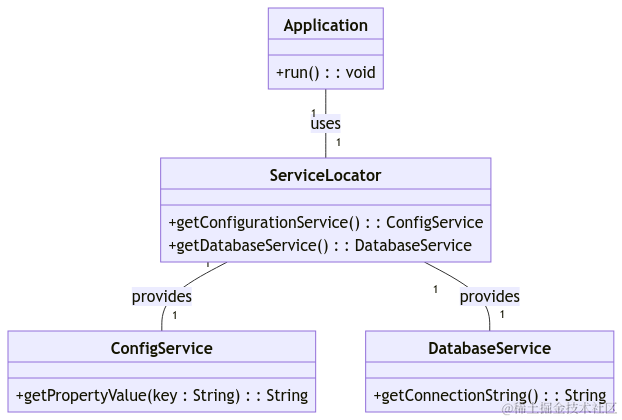
3. 标准服务定位器设计模式图
服务定位器模式(Service Locator Pattern): 微服务配置管理实战案例分析_微服务_02

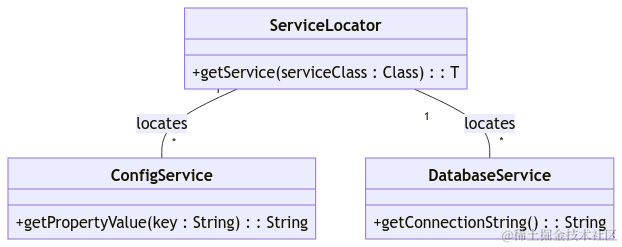
4. 业务服务定位器设计模式图

服务定位器模式(Service Locator Pattern): 微服务配置管理实战案例分析_设计模式_03

5. 业务代码参考
// 服务定位器接口
interface ServiceLocator {
    <T> T getService(Class<T> serviceClass);
}

// 配置服务接口
interface ConfigService {
    String getPropertyValue(String key);
}

// 数据库服务接口
interface DatabaseService {
    String getConnectionString();
}

// 配置服务实现
class EnvironmentConfigService implements ConfigService {
    @Override
    public String getPropertyValue(String key) {
        // 从环境变量中获取配置值
        return System.getenv(key);
    }
}

// 数据库服务实现
class DefaultDatabaseService implements DatabaseService {
    @Override
    public String getConnectionString() {
        // 从配置服务中获取连接字符串
        return "jdbc:mysql://localhost:3306/ecommerce";
    }
}

// 服务定位器实现
class ServiceLocatorImpl implements ServiceLocator {
    private Map<Class<?>, Object> services = new HashMap<>();

    public ServiceLocatorImpl() {
        services.put(ConfigService.class, new EnvironmentConfigService());
        services.put(DatabaseService.class, new DefaultDatabaseService());
    }

    @SuppressWarnings("unchecked")
    @Override
    public <T> T getService(Class<T> serviceClass) {
        return (T) services.get(serviceClass);
    }
}

// 应用程序入口
public class Application {
    public static void main(String[] args) {
        ServiceLocator locator = new ServiceLocatorImpl();
        ConfigService configService = locator.getService(ConfigService.class);
        DatabaseService dbService = locator.getService(DatabaseService.class);

        // 使用配置服务和数据库服务
        String dbConnectionString = dbService.getConnectionString();
        String someConfigValue = configService.getPropertyValue("SOME_CONFIG_KEY");

        System.out.println("Database Connection String: " + dbConnectionString);
        System.out.println("Config Value: " + someConfigValue);
    }
}
  • 1.
  • 2.
  • 3.
  • 4.
  • 5.
  • 6.
  • 7.
  • 8.
  • 9.
  • 10.
  • 11.
  • 12.
  • 13.
  • 14.
  • 15.
  • 16.
  • 17.
  • 18.
  • 19.
  • 20.
  • 21.
  • 22.
  • 23.
  • 24.
  • 25.
  • 26.
  • 27.
  • 28.
  • 29.
  • 30.
  • 31.
  • 32.
  • 33.
  • 34.
  • 35.
  • 36.
  • 37.
  • 38.
  • 39.
  • 40.
  • 41.
  • 42.
  • 43.
  • 44.
  • 45.
  • 46.
  • 47.
  • 48.
  • 49.
  • 50.
  • 51.
  • 52.
  • 53.
  • 54.
  • 55.
  • 56.
  • 57.
  • 58.
  • 59.
  • 60.
  • 61.
  • 62.
  • 63.
  • 64.
6. 使用服务定位器设计模式的好处
  • 环境无关性:应用程序不需要关心具体的配置服务实现,只需通过服务定位器获取。
  • 动态服务访问:在运行时根据环境或其他条件动态确定使用哪个配置服务。
7. 其他使用服务定位器设计模式场景参考
  • 数据库连接管理:根据不同环境使用不同的数据库连接。
  • 消息队列服务访问:根据不同环境连接到不同的消息队列服务。
8. 可参考开源框架
  • Spring Cloud Config:Spring Cloud的配置管理工具,使用服务定位器模式来动态获取配置。
总结

服务定位器模式为微服务架构中的配置管理提供了一种灵活的解决方案,使得应用程序能够根据不同的运行环境动态访问配置服务。

历史热点文章

原创作者: xiaogeit 转载于: https://blog.51cto.com/xiaogeit/11449002
Logo

北京人形旗下天工造物具身智能开源社区,聚焦具身天工与慧思开物两大平台

更多推荐

  • 浏览量 138
  • 收藏 0
  • 0

所有评论(0)

查看更多评论 
已为社区贡献1条内容